Dubai Off-Plan Market Demand in 2026: Buyer Signals and Risks
Dubai off-plan market demand 2026: Q1 sales context, regional uncertainty, buyer signals and how to read demand by area, developer, payment plan and handover.
Dubai’s off-plan market in 2026 is still active, but it is harder to read than it was during the straight-line growth years. Q1 closed at AED 139.1 billion in residential sales according to Cavendish Maxwell, with off-plan transaction volume up 10.5% year-on-year, yet the quarter contained three different market moods: a record January, a steady February and a softer March during regional uncertainty.
That is the real lesson for buyers. Dubai off-plan demand should not be judged by one headline number, one weak month or one strong recovery figure. It has to be read by segment: area, developer, payment plan, handover year, unit type and the amount of similar stock expected to complete around the same time. This guide shows how to read those signals before choosing a project.
What’s in this guide:
Quick answer:
- Is Dubai off-plan demand still strong in 2026? Yes, but it is uneven. Q1 reached AED 139.1 billion in residential sales and off-plan transaction volume rose 10.5% year-on-year, while March was softer during a period of regional uncertainty.
- What did the full first half show? Projectory’s DLD analysis recorded 56,565 off-plan sales in H1 2026, up 3.9% year on year, while ready-property activity declined.
- What changed in 2026? The market is no longer moving as one block. Entry-level apartments, family townhouses, premium villas and post-handover payment plans are attracting different buyer groups.
- What should buyers focus on? Read demand by lane: area supply depth, developer delivery record, payment-plan burden, handover year and real end-user or tenant demand.
- Walk away if: A project lacks DLD registration, escrow protection, a clear SPA, or a payment plan your cash flow can survive under a delay scenario.
Data note: Market figures in this article reference public reporting from Cavendish Maxwell, ValuStrat, DXB Interact, Arabian Business and Reuters. Projectory’s Dubai Property Market H1 2026 DLD report provides the complete 1 January to 30 June transaction view from Projectory’s data pulled directly from DLD records. Verify project-specific pricing, availability, service charges, escrow status and payment plans before committing. This guide is for buyer education and does not replace legal or investment advice on a specific project.
Key takeaways:
- Dubai residential sales reached AED 139.1 billion in Q1 2026, with off-plan transaction volume up 10.5% year-on-year according to Cavendish Maxwell.
- The Q1 headline hides different monthly signals: record activity in January, steady momentum in February and a softer March during regional uncertainty.
- April 2026 off-plan apartment sales reached AED 19.7 billion, the strongest monthly total of the year at that point, showing partial recovery but not yet a confirmed new baseline.
- ValuStrat’s Q1 2026 Dubai Price Index recorded an 8.9% annual gain alongside a 3.8% quarterly correction in Dubai residential capital values.
- At the time of writing, the live project catalogue shows Dubailand leading area supply depth with 37 live projects, followed by Town Square with 26, Dubai South and JVC with 22 each.
For the full Dubai off-plan buying process, from reservation through SPA review, payment plans and handover, read the complete guide to off-plan property in Dubai.
What Dubai off-plan demand in 2026 really shows after Q1
Dubai off-plan demand in 2026 remains active, but Q1 should be read as a mixed quarter rather than a single trend.
Cavendish Maxwell reported approximately 44,200 Dubai residential transactions worth AED 139.1 billion in Q1 2026, with off-plan transaction volume up 10.5% year-on-year. That confirms buyer activity did not disappear. It also confirms that off-plan remains a structural part of Dubai’s residential market rather than a fringe segment.
The month-by-month pattern matters more than the headline. January set an all-time monthly sales record. February held momentum. March softened during a period of regional uncertainty. Reuters reported early signs of weakness in March, citing Goldman Sachs estimates that UAE real-estate transaction volumes fell 37% year-on-year and 49% month-on-month in the first 12 days of the month. ValuStrat’s Q1 2026 Dubai Price Index recorded citywide residential capital values at 229.2 points, up 8.9% annually but down 3.8% quarter-on-quarter.
April improved the picture, but did not settle the debate. Arabian Business reported AED 19.7 billion in Dubai off-plan apartment sales in April 2026, the highest monthly total of the year at that point. That shows buyer activity returned quickly in some segments, but a single recovery month should not be treated as a new normal until Q2 reporting is complete.
The practical lesson is simple: Dubai off-plan demand is still real, but the average market does not buy your unit. Your outcome depends on the specific lane you buy into.
How to read Dubai off-plan demand signals without overreacting
The best way to read Dubai’s 2026 off-plan market is to separate demand signals from buyer decisions.
Some signals show attention. Some show liquidity. Some show pricing power. None of them, on their own, tell you whether a specific unit is a good buy. The goal is to read them together.
This is where many buyers misread the market. A record month does not mean every launch is underpriced. A soft month does not mean every project is risky. A famous developer does not remove payment-plan pressure. A high-supply area can be liquid if demand is broad, but vulnerable if too many similar units complete together.
2026 buyer rule: Do not buy because Dubai off-plan demand is strong overall. Buy only if demand is strong in your specific lane: the right area, the right unit type, the right handover year and a payment plan your cash flow can survive.
Browse current Dubai off-plan projects by area, developer, starting price and handover date on Projectory to test these signals against live listings.
Which buyer segments are still driving Dubai off-plan demand?
Dubai off-plan demand in 2026 is being driven by three main buyer groups: yield-focused investors, end users and payment-plan shoppers.
Yield-focused investors are still active, but more selective. They are looking for manageable entry prices, broad tenant demand and areas where post-handover rental potential can justify the construction-period wait. They are also the most exposed to rent softening, service charges and handover clustering because their returns depend on future leasing conditions.
End users behave differently. They care more about handover certainty, unit size, school access, commute time and community maturity. A six-month delay matters more to a family planning to move out of a rental than it does to an investor who can wait for the market to stabilise.
Payment-plan shoppers cut across both groups. They are not only comparing price. They are comparing when cash leaves their account.
The difference is not cosmetic. On Binghatti Hills Phase 2 at AED 550,000, a 10/40/50 post-handover structure means AED 275,000 before handover and AED 275,000 after handover. That may suit a buyer who plans to rent the unit and use rental income against later instalments.
On Violet at DAMAC Hills 2 at AED 1,870,000, a 10/70/20 plan requires AED 1,496,000 before handover and AED 374,000 at completion. That is a completely different risk profile. The second buyer is less exposed to handover balance shock, but far more exposed to construction-period cash pressure.
Which Dubai areas have the deepest off-plan supply, and what that means
The Dubai areas with the deepest live off-plan supply give buyers more choice, but also require closer handover-clustering checks.
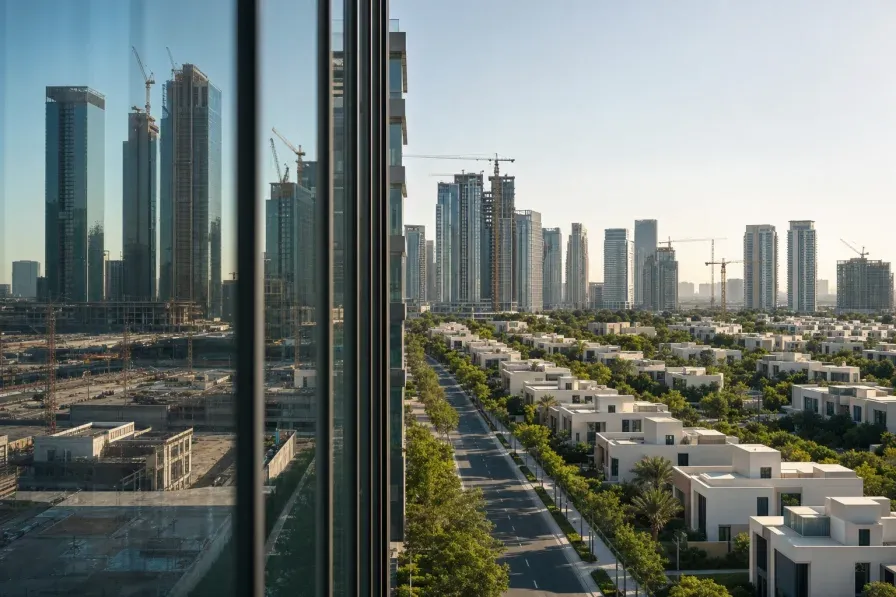
At the time of writing, the live project catalogue shows Dubailand leading with 37 live projects, followed by Town Square with 26, Dubai South and Jumeirah Village Circle with 22 each, Dubai Hills Estate and Dubai Investment Park with 19 each, and Business Bay with 18.
Supply depth is not automatically good or bad. It is a signal to interpret. Deep supply can create liquidity because buyers have enough stock to compare and transact. It can also create pressure if multiple similar projects complete in the same 12-month window.
The buyer action is specific: check the handover years of comparable projects within the same area, and preferably within a 1km radius for apartment-heavy districts. If five projects deliver similar one-bedroom units in the same quarter, your resale and rental assumptions should be more conservative.
Browse current off-plan launches by area, developer, starting price and handover date on Projectory to compare supply depth against your own timeline.
Project examples: four demand lanes buyers should separate
Dubai’s 2026 off-plan market should be read in lanes, not as one blended demand story.
Entry-level apartments under AED 600,000
Best buyer fit: Yield-focused investors with lower ticket-size requirements.
Main demand driver: Affordable entry price and a wider tenant pool.
Main risk: Too many similar units completing in the same mid-market area.
What to check before signing: Comparable rents, service charges and nearby handovers.
Binghatti Hills Phase 2 in Dubai Science Park starts from AED 550,000 with a 10/40/50 post-handover plan and February 2027 handover. Azizi Milan 20 starts from AED 591,000 with a 10/50/40 structure and June 2027 handover. The demand case is affordability, but the underwriting should still be conservative because post-handover yield is not earned until the unit is delivered and leased.
Family townhouses around AED 1.5M to AED 2M
Best buyer fit: End users and investors targeting family tenant demand.
Main demand driver: Limited affordable four-bedroom townhouse supply.
Main risk: Front-loaded payment plans and area-level delivery competition.
What to check before signing: Road access, school proximity, community maturity and realistic resale demand.
Violet at DAMAC Hills 2 starts from AED 1,870,000 with a 10/70/20 plan and April 2026 handover. Near-term delivery gives buyers more certainty than a 2028 or 2029 project, but the cash profile is heavier before handover. For families, that may be acceptable if the move-in timeline works. For investors, it requires a clear view on tenant demand and exit liquidity.
Mid-premium future end-user homes
Best buyer fit: Buyers planning around a 2027-2028 lifestyle or family timeline.
Main demand driver: Master-community growth and larger living formats.
Main risk: Buying before the wider area fully matures.
What to check before signing: Infrastructure delivery, nearby retail, schools and comparable completed stock.
Al Waha Residences 2 in Expo City starts from AED 1,900,000 with a 10/40/50 plan and June 2027 handover. Avena 2 at The Valley starts from AED 4,370,000 with June 2028 handover. These projects depend less on immediate rental yield and more on whether the community matures in line with the buyer’s planned hold period.
Long-horizon premium villas above AED 5M
Best buyer fit: Long-hold buyers with strong cash reserves.
Main demand driver: Scarcity of larger homes and lifestyle-led end-user demand.
Main risk: Large capital exposure across a three-plus-year construction window.
What to check before signing: Developer track record, payment-plan burden, construction updates and exit liquidity before handover.
Cassia Phase 2 in Dubailand starts from AED 5,100,000 with April 2029 handover. Chevalia Estate 2 in Dubai Investment Park starts from AED 7,880,000 with June 2029 handover. D Villas by Dar Global in Jumeirah Golf Estates ranges from AED 6,600,000 to AED 9,300,000 with December 2029 handover.
This lane is not mainly about short-term demand. It is about whether the buyer has the liquidity and patience to hold through construction and whether the finished home will appeal to a deep enough end-user pool.
How developer depth affects confidence, but not guaranteed delivery
Developer depth can support buyer confidence, but it does not replace project-specific due diligence.
At the time of writing, the live developer catalogue is led by Emaar with 92 live projects, followed by Binghatti with 43, Sobha Realty with 33, Aldar Properties with 29, DAMAC Properties with 27, Nshama with 26 and Ellington with 24.
A visible developer has more reputation at stake, especially in a volatile year. That matters. But the buyer’s checklist should still be the same: DLD registration, escrow account, SPA delay clauses, assignment rules, NOC costs, construction progress and comparable handover dates in the same area.
A strong brand can make a shortlist easier. It should not make due diligence shorter.
What risks should buyers stress-test before signing in 2026?
The main risks in Dubai’s 2026 off-plan market are not reasons to avoid the market. They are reasons to size the purchase correctly.
The most important risk is often cash-flow pressure. A 10/70/20 plan front-loads 80% of the price before handover. A 10/40/50 post-handover plan reduces the pre-handover burden but extends obligations after completion. Neither is automatically better. The safer plan is the one your cash flow can handle if handover is delayed or rents come in below expectation.
Before signing any off-plan SPA in 2026, check:
- DLD project registration number and escrow account details
- Developer’s last five handover dates against original promised dates
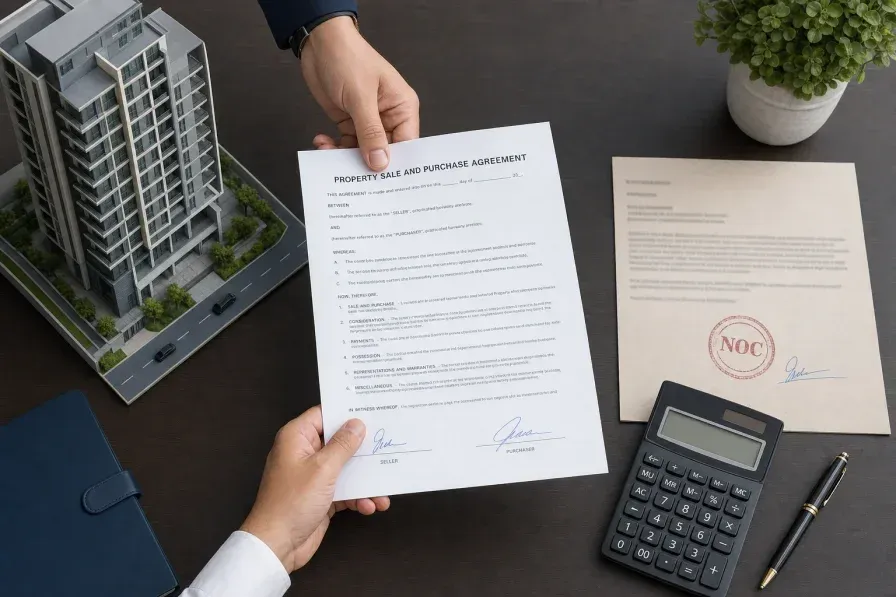
- SPA clauses on delay penalties, assignment thresholds and NOC fees
- Total cash required before handover, not just the down payment
- Comparable handover dates within 1km of the project
- Your cash-flow plan against a 12-month delay scenario
How to choose an off-plan project in a mixed-demand market
Choosing well in 2026 means building a shortlist around resilience, not just upside.
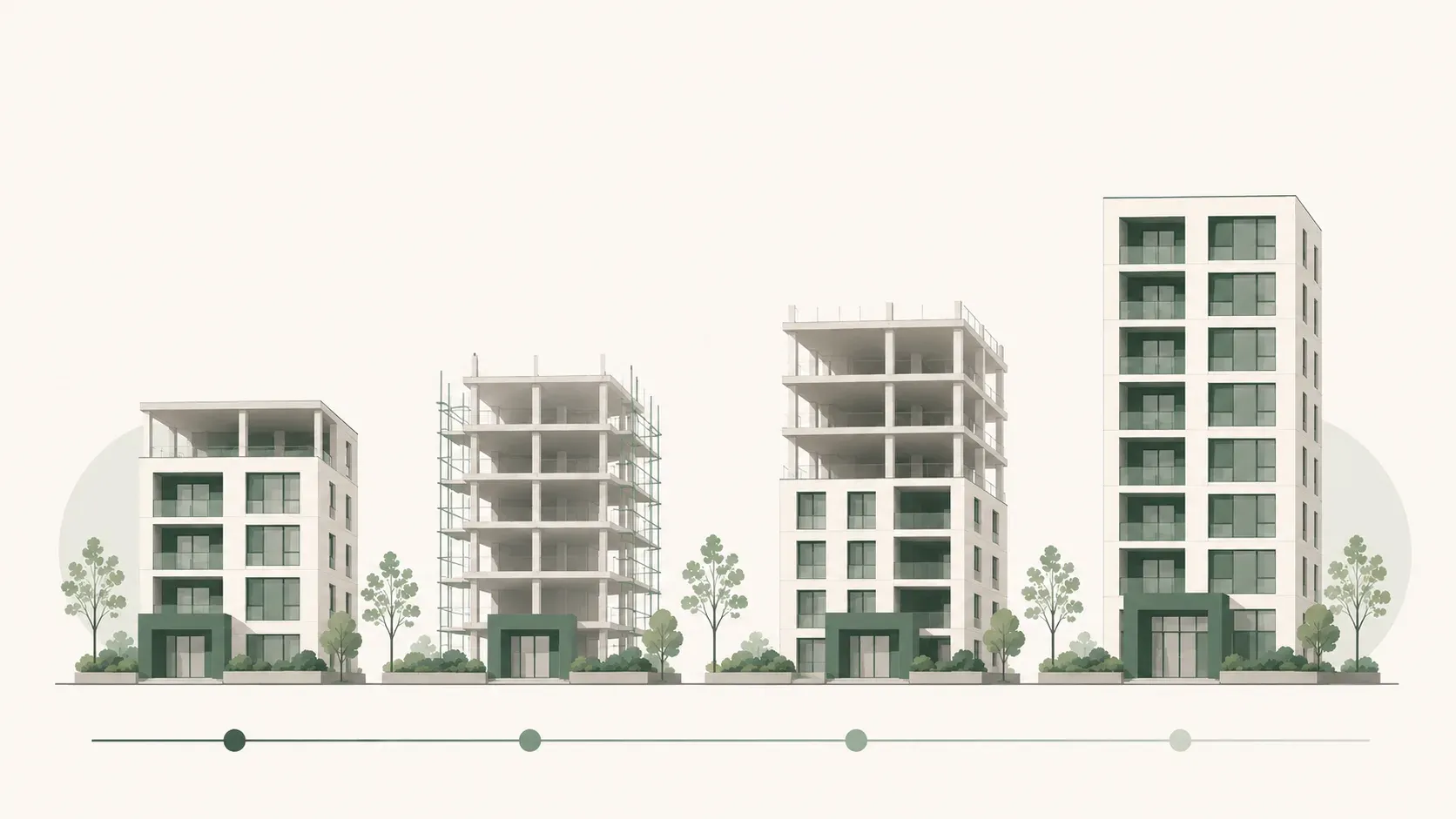
Start with the unit’s lane. Is it an affordable apartment, a family townhouse, a mid-premium end-user home or a long-horizon premium villa? Then test the project against five signals: area supply depth, developer delivery history, handover year, payment-plan burden and the buyer profile most likely to absorb the unit at completion.
A buyer wanting near-term delivery and lower construction-period exposure might examine Violet at DAMAC Hills 2, then compare it against ready resale stock and other family townhouse options. A long-horizon villa buyer might compare Avena 2 at The Valley against Cassia Phase 2 in Dubailand and D Villas by Dar Global in Jumeirah Golf Estates. Those are different price points and timelines, but they compete for overlapping end-user attention.
The mistake is letting one signal override the rest. A famous developer in a high-supply area with a difficult payment plan is not automatically better than a smaller developer in a focused community with cleaner cash-flow terms. The framework matters more than the headline.
Browse current Dubai off-plan projects by area, developer, starting price and handover date on Projectory to compare these signals across your shortlist.
Frequently asked questions
Is Dubai off-plan market demand in 2026 still strong after the March slowdown?
Yes, but it is more uneven than the headline suggests. Cavendish Maxwell reported AED 139.1 billion in Q1 residential sales and 10.5% year-on-year off-plan transaction volume growth. April also showed renewed activity, with AED 19.7 billion in off-plan apartment sales. Buyers should still separate broad demand from project-level suitability.
Why did January and March 2026 show such different signals?
January captured strong pre-shock momentum, while March reflected a more cautious period during regional uncertainty. ValuStrat recorded a quarterly correction in capital values in Q1, while transaction activity softened. The contrast shows why buyers should avoid reading a single month as the full market trend.
Does rising buyer attention mean Dubai off-plan prices will keep increasing?
Not automatically. Buyer attention can rise when people see opportunity or when they are stress-testing risk. In 2026, the market has shown both softer pricing signals and renewed transaction activity. Treat attention as a prompt to verify projects, not as a forecast.
Which Dubai areas have the deepest live off-plan supply?
At the time of writing, Dubailand leads the live project catalogue with 37 projects, followed by Town Square with 26, Dubai South and JVC with 22 each, Dubai Hills Estate and Dubai Investment Park with 19 each, and Business Bay with 18. Deeper supply gives buyers more choice, but handover clustering still needs checking.
How should buyers compare a 2026 handover with a 2028 or 2029 handover?
Match the handover year to your cash flow and life plan first. A 2026 handover gives near-term delivery but may require heavier upfront payments. A 2028 or 2029 handover spreads the decision over a longer period but adds construction, market and exit-risk exposure.
Are post-handover payment plans stronger in a mixed-demand market?
They can be useful, but they are not automatically safer. Post-handover plans reduce pre-handover cash pressure and may suit rental-income strategies after completion. The risk is that the buyer still owes money after handover, so the SPA schedule, expected rent and service charges need to be stress-tested.
What 2026 market data should buyers avoid misreading?
Avoid extrapolating from one month. Q1 combined record activity, steady momentum and a softer March, while April showed recovery. None of those signals alone should decide a purchase. The better test is whether the project still works under slower growth, delayed handover and softer rent assumptions.
Sources and useful references
- Cavendish Maxwell. Dubai Residential Market Performance Q1 2026
- ValuStrat. Dubai Q1 2026 Property Market Research Report
- DXB Interact. Dubai transaction data
- Arabian Business. Dubai off-plan apartment sales hit AED 19.7bn in April 2026
- Reuters. Dubai property sector shows early signs of weakness
Final verdict: demand is real, but the average does not buy your unit
Dubai’s 2026 off-plan demand is still active, but the average market does not determine whether your unit performs. Your outcome depends on the lane you buy into: area supply depth, developer delivery record, handover year, payment-plan burden and whether the finished unit has a real end-user or tenant base.
The best buyers in 2026 will not be the ones who react to the strongest month or the weakest month. They will be the ones who read several signals together and only commit when the project still works under a slower-growth scenario.
Browse current Dubai off-plan projects by area, developer, starting price and handover date on Projectory.
About the Projectory Team
Projectory’s editorial content is created and reviewed by its founders, who bring more than 30 years of combined experience brokering, buying, developing and selling property in the UAE.