Abu Dhabi vs Dubai for Off-Plan Investment: Costs, Returns and Lifestyle
Compare Dubai and Abu Dhabi off-plan costs, buying steps, returns, family lifestyle, popular areas and current projects before choosing where to invest.
What’s in this guide:
- The quick answer: Dubai or Abu Dhabi?
- How the two off-plan markets differ
- Population, land area and price per square foot
- What it costs to buy
- How the buying process changes
- Rental returns, price growth and resale
- Popular Dubai areas and current projects
- Popular Abu Dhabi areas and current projects
- Which emirate fits your life and investment plan?
Choosing between Dubai and Abu Dhabi for an off-plan property is a good problem to have. Both cities offer regulated project sales, established developers, modern infrastructure and communities that can make an excellent home. They simply reward different priorities.
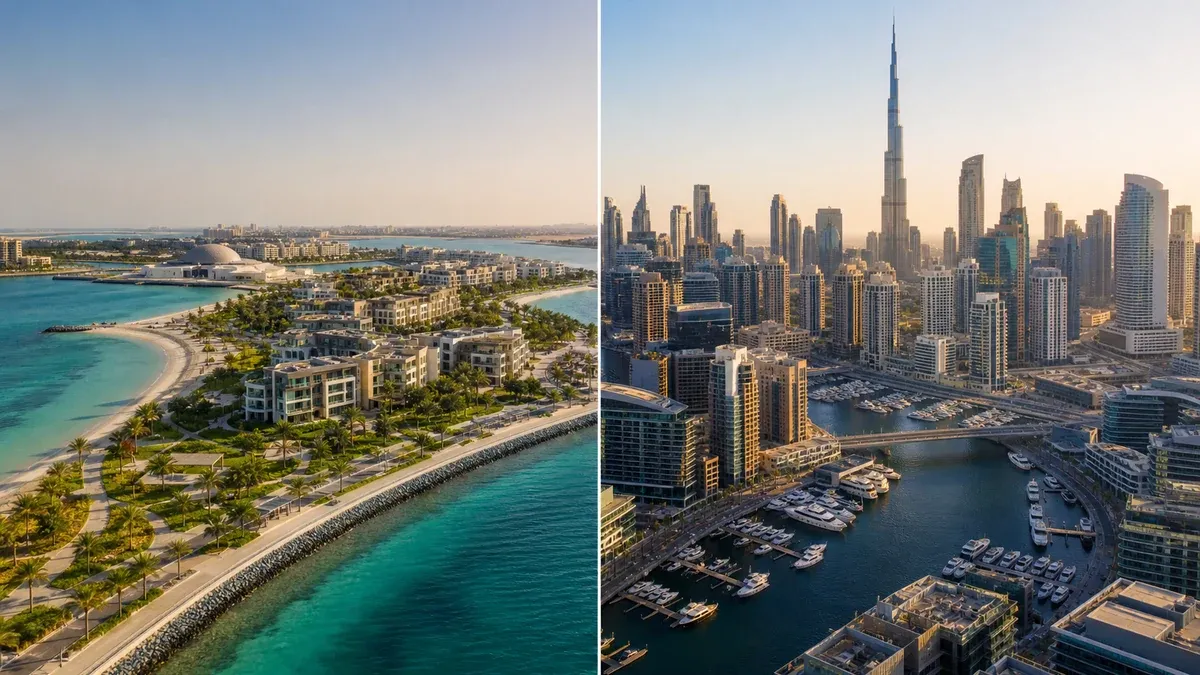
Dubai gives a buyer far more choice. There are waterfront apartments, golf communities, central towers, airport-led growth corridors, family townhouses and ultra-prime villas launching at the same time. Its resale market is deeper and its international buyer base is wider. If you want to compare ten viable projects at one budget, or you expect to sell before or soon after handover, Dubai usually gives you more room to move.
Abu Dhabi feels more deliberate. Much of its most compelling new supply is concentrated on Yas Island, Saadiyat Island, Al Reem Island and Hudayriyat Island. The city suits buyers who enjoy beaches, culture, sport, generous public space and a calmer daily rhythm. The statutory registration charge is also lower: 2% of the sale value in Abu Dhabi versus 4% in Dubai, with the contract determining the amount that ultimately sits with the buyer.
Our advice is to start with your life for the next five years. Where will you work? Who will rent the home if you leave? Which school run or airport route will you make every week? Once those answers are clear, the emirate often chooses itself.
At a glance
Inventory checked 17 July 2026: Guide prices, available units, payment plans and completion dates can change with every release. Confirm the exact unit and all charges in writing before paying a reservation amount.
The quick answer: Dubai or Abu Dhabi?
Dubai is the stronger fit for buyers prioritising project choice, resale depth, short-term rental demand or access to a major business district. Abu Dhabi suits households drawn to island living, family leisure, culture, beaches and a calmer daily rhythm.
Compare communities and floor plans before comparing city averages. Dubai Creek Harbour can provide waterfront calm, while Reem Island offers the apartment convenience associated with central Dubai. The exact unit will decide whether either investment works.
How the two off-plan markets differ
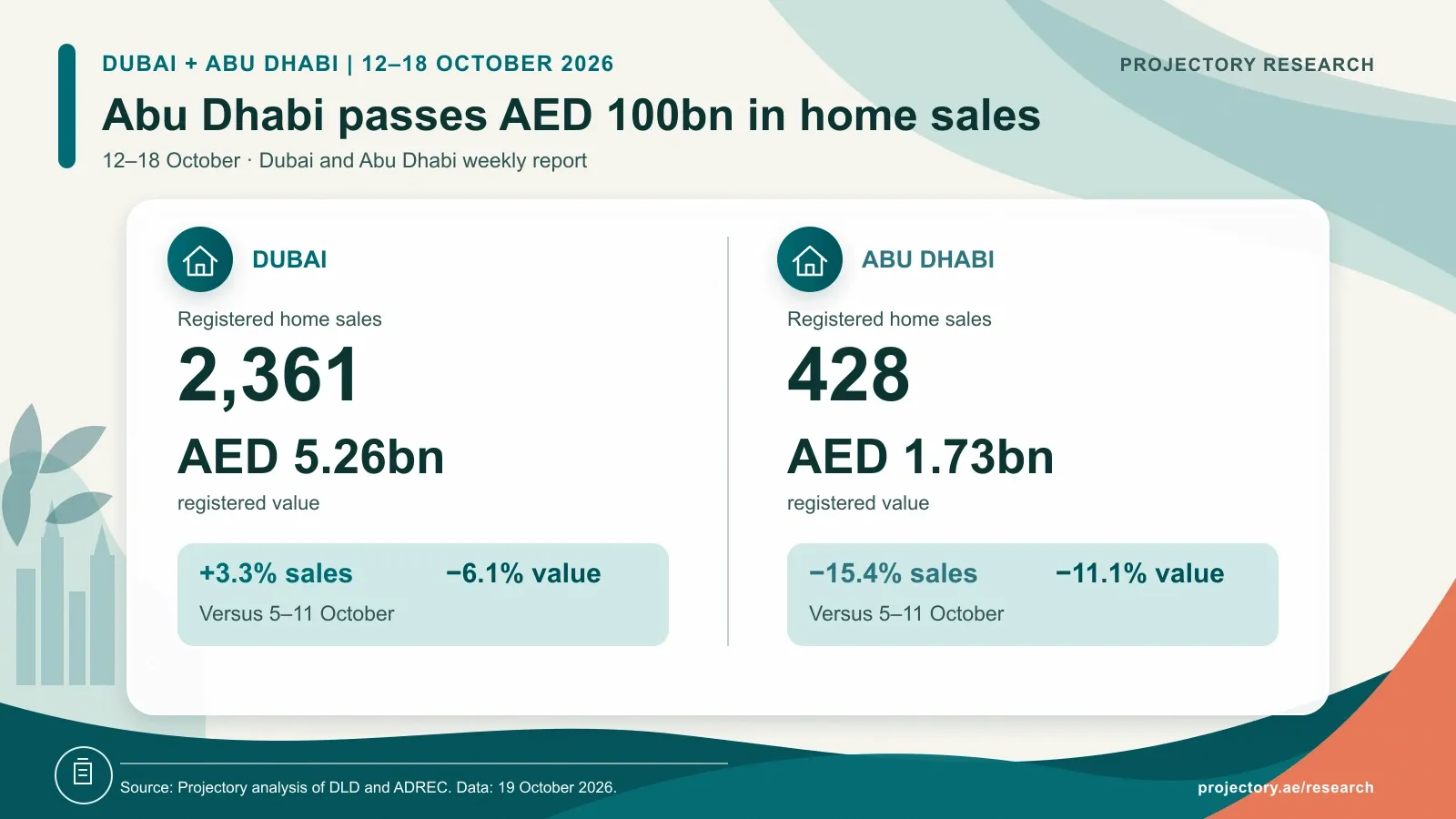
Dubai’s market has scale. Our analysis of residential-market registrations pulled directly from the Dubai Land Department recorded 79,698 sales worth AED 227.1bn during H1 2026. Off-plan accounted for 56,565 sales, equal to 71% of the total. The city also had 226 project numbers record their first off-plan sale during the first half of the year.
That depth gives buyers a wide price ladder. Current guide prices in our directory run from below AED 700,000 for selected apartments in JVC and Dubai South to AED 25m for villas on Palm Jebel Ali. Between those points sits a very large AED 1m to AED 5m market covering central apartments, family communities, waterfront homes and branded residences.
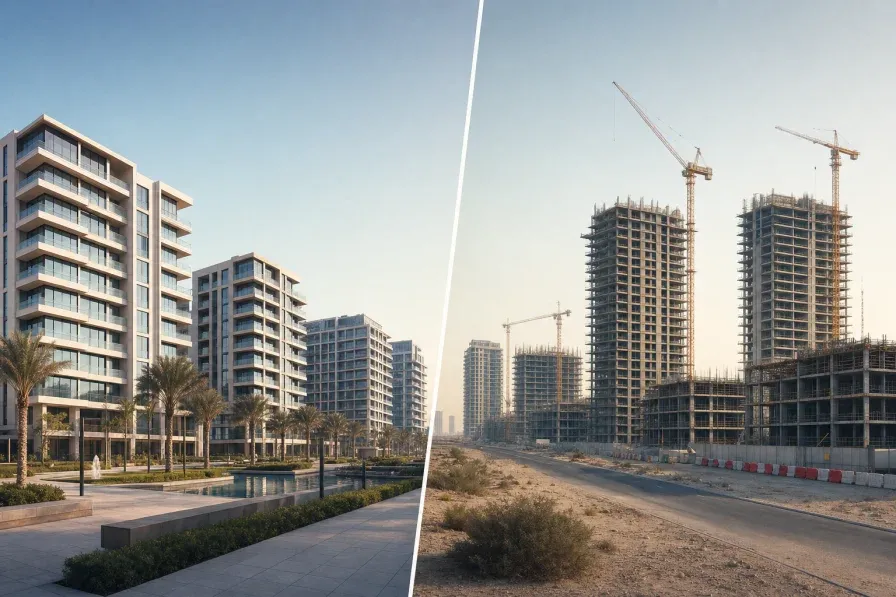
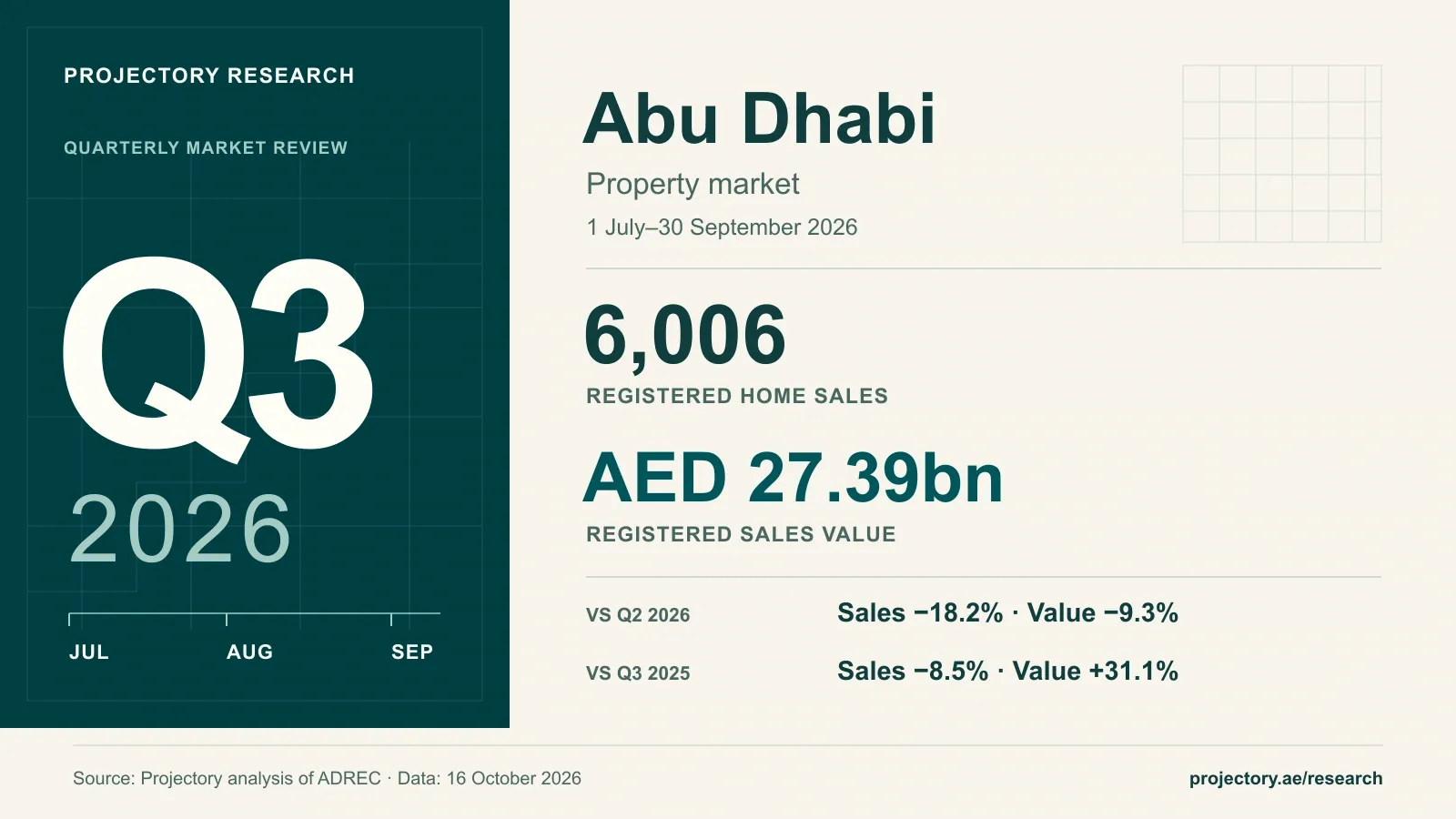
Abu Dhabi is smaller and currently moving quickly. CBRE’s Q1 2026 residential analysis recorded 8,315 deals worth AED 46bn, with off-plan contributing about 81% of transactions. Hudayriyat, Yas, Saadiyat and Reem were among the areas driving activity. The capital’s current launch market leans towards complete lifestyle destinations with a recognisable master developer and a clearly defined reason to live there.
These figures cover different periods and classifications. Treat them as separate market signals. Dubai offers more trading depth. Abu Dhabi’s recent growth has been concentrated in a smaller number of highly desirable locations.
Population, land area and price per square foot
The two emirates now support populations of a similar size. Dubai had 4,248,200 residents at the end of 2024, while Abu Dhabi had 4,135,985. Their physical scale could hardly be more different: Dubai covers 4,114 sq km and Abu Dhabi spans 67,340 sq km.
That Abu Dhabi figure includes Al Ain and Al Dhafra as well as Abu Dhabi city and its islands. Most of the off-plan market discussed in this guide sits within a much smaller coastal and urban area. The emirate-wide comparison still helps to explain Abu Dhabi’s lower-density character and the room available for new island and suburban communities.
The apartment averages sit relatively close together, with Dubai around 12% higher in Q1 2026. The villa gap is much wider: Dubai’s average was almost double Abu Dhabi’s. Dubai’s ultra-prime coastal and large master-community sales lift its emirate-wide villa figure, while Abu Dhabi still offers more space for the money across many family areas.
These are broad sales-market benchmarks from the same Q1 2026 research series. A new launch on Saadiyat Island, Palm Jumeirah or Dubai Hills can sit well above its emirate average. Price per square foot is most useful when comparing similar property types, locations, views and completion dates; the floor plan and total purchase price still shape the final decision.
What it costs to buy
The registration fee creates the clearest upfront difference.
Dubai Land Department lists the sale registration charge as 2% for the seller and 2% for the purchaser. In the primary market, many reservation forms and SPAs require the buyer to cover the full 4%. That common commercial arrangement should be written into your cash-flow plan from the start.
Abu Dhabi’s regulations set a 2% fee and allocate it equally between the seller and buyer, up to a maximum fee of AED 2m per transaction. This usually places 1% with the buyer. Check the SPA because a launch promotion or contractual term can change who pays each amount.
Here is a practical AED 2m example:
The AED 60,000 difference can cover furnishing, a later instalment or an emergency reserve. The full budget should also include any project administration charge, mortgage costs, service charges after handover, snagging, furnishing and the cash needed for each construction milestone.
Many developer-direct purchases carry no separate buyer-side agency commission, although the buyer should confirm this in writing. Ask for one schedule showing every payment through to handover. Our DLD fee guide explains the Dubai charges in detail; the Abu Dhabi off-plan guide covers the capital’s fees and handover budgeting.
How the buying process changes
The commercial sequence is similar in both cities: reserve a registered unit, sign the SPA, complete the government registration, pay construction instalments into the approved project account and inspect the home before completion. The systems around that journey have different names and checks.
The practical difference is where the buyer verifies the project and how the contract appears in the government system. In either emirate, read the unit-specific SPA, confirm the escrow instructions and map every instalment against your cash position.
The complete Dubai off-plan guide and complete Abu Dhabi off-plan guide take each purchase from reservation to handover. For narrower questions, use our Dubai mortgage guide, ADREC buyer-protection guide and explanation of the Modon and ADIB financing plan.
Rental returns, price growth and resale
Returns arrive through three routes: rental income after handover, growth in the value of the home, and any premium realised through an assignment sale before completion. Each route depends on the entry price and exact unit.
Current market-wide yields are closer than many sales presentations suggest. FAB Research, using REIDIN data for March 2026, placed Dubai’s gross residential yield at 6.6% and Abu Dhabi’s at 6.1%.
These are broad gross averages for completed homes. Service charges, maintenance, vacancy, management and furnishing reduce the return, while an off-plan home produces no rent until it is handed over and ready for a tenant. Use our off-plan ROI guide to model the full cash invested and the unit’s expected net income.
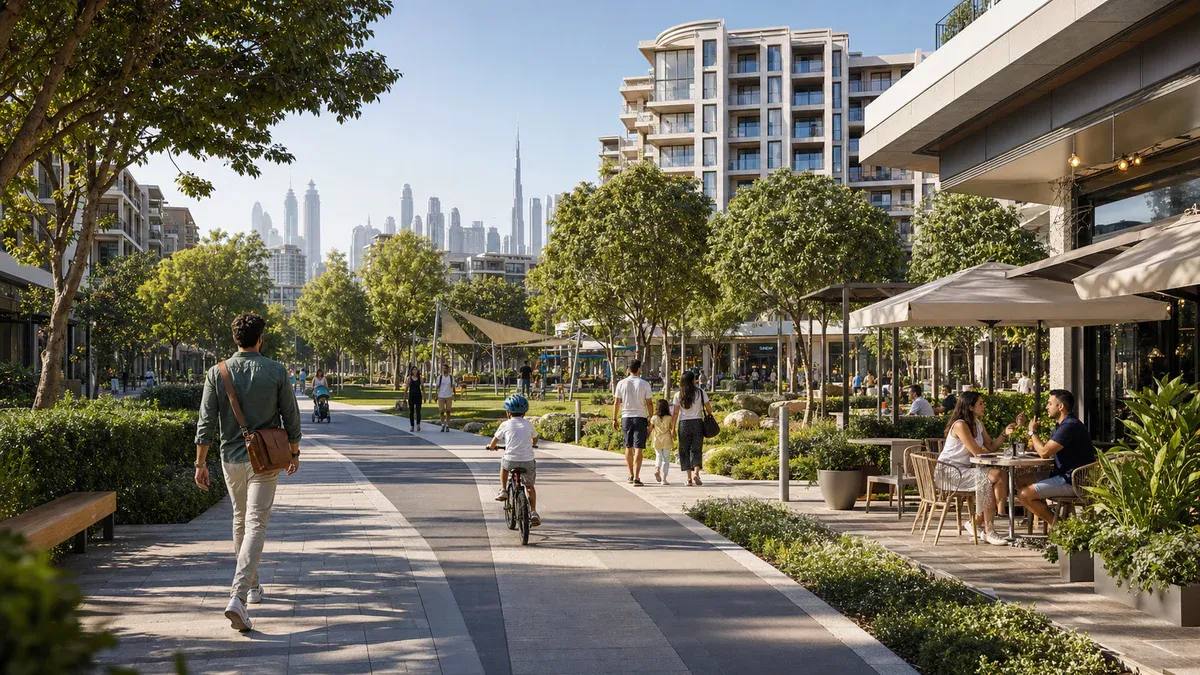
Dubai: deeper liquidity and more competing supply
Dubai’s advantage is the number of people who understand and search its communities. A good one-bedroom in Dubai Hills, Creek Harbour, Business Bay or JVC can appeal to local tenants, overseas investors and end users. The city also has more competing supply, so floor plan, view and entry price become crucial when several nearby buildings complete together.
Buyers considering an early exit should compare the likely assignment listings in the same project and read our guide to selling before handover for the developer thresholds, transfer costs and NOC process.
Abu Dhabi: strong recent growth and an island-led tenant story
Abu Dhabi entered 2026 with rapid growth in its leading districts. CBRE recorded residential prices up 32% year on year in Q1 and rents up 15%, with apartment demand particularly strong. The entry price still needs discipline after such a sharp move.
The tenant case is clear in the major islands. Reem serves people working around Al Maryah Island, ADGM and central Abu Dhabi. Yas combines leisure, schools and airport access. Saadiyat appeals to executives, university households and beach-focused families. Hudayriyat is building a distinct sports and outdoor identity close to the city.
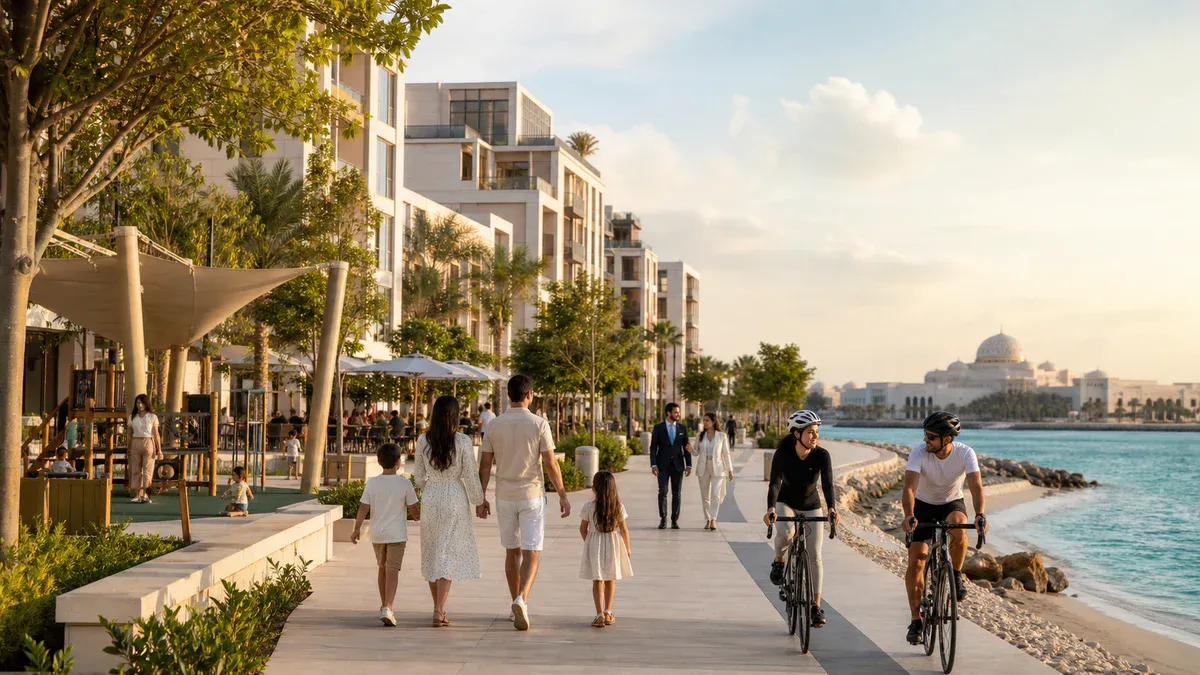
Capital growth starts with scarcity a future buyer can see
A protected water view, a short walk to a major park, a rare townhouse layout or a well-sized two-bedroom near employment gives a future buyer an immediate reason to choose the home. The strongest purchases are easy to explain in one sentence: a proper two-bedroom beside Dubai Hills Park, a family apartment on Yas with an easy airport run, or a Saadiyat home close to the beach and cultural district.
Popular Dubai areas and current projects
Dubai gives buyers enough choice to build a shortlist around a very specific life. The projects below are a current comparison snapshot; our UAE off-plan areas guide provides the wider community shortlist.
Dubai Hills Estate: the polished family choice
Dubai Hills Estate is one of the city’s easiest family communities to recommend. Dubai Hills Park, the golf course, Dubai Hills Mall, schools, nurseries and King’s College Hospital support everyday life. Road access works for Downtown, DIFC, Dubai Marina and both sides of the city.
The current apartment pipeline includes Vida Residences Club Point from AED 1.45m, Golf Hillside from AED 1.47m and Club Place from AED 1.48m. Park Gate 2 and Eden House serve high-budget villa buyers. Read our detailed Dubai Hills off-plan guide for the current project breakdown.
Dubai Creek Harbour: waterfront calm near central Dubai
Dubai Creek Harbour combines Creek Beach, a marina, promenades, parks, hotels and skyline views. Dubai Festival City Mall is close for major shopping, while the Blue Line is scheduled to bring Metro access in 2029.
Montiva currently starts from AED 1.5m, Oria from AED 1.6m and Arlo from AED 1.7m. Later releases such as Creek Haven and Creek Bay extend payment schedules towards 2030. The Dubai Creek Harbour area guide compares all current launches.
Business Bay: central, urban and internationally familiar
Business Bay works for buyers who want restaurants, hotels, offices and fast access to Downtown and DIFC. Some sections are walkable and Metro-connected; others depend heavily on the exact tower and road access. The district has a deep rental audience, especially for efficient one- and two-bedroom apartments.
Binghatti Aquarise currently has a guide entry from AED 1.3m with expected Q2 2027 handover. DG1 starts from AED 1.5m, while Avarra by Palace brings a branded option from AED 2.7m. Compare outlook, construction around the plot, service charges and parking access very carefully.
JVC and Dubai South: accessible entry and yield-led demand
JVC offers parks, Circle Mall, schools and thousands of apartments at a relatively accessible price. Berkeley Square starts from AED 690,000 and Maison Elysee 3 from AED 659,000 in our current directory. Supply is large, so the best investment is usually the building and layout with the clearest advantage.
Dubai South suits buyers who believe in the long-term growth around Expo City and Al Maktoum International Airport. Inara Residences currently starts from AED 673,000, Golf Point from AED 850,000 and Golf Acres from AED 950,000. Family buyers can move into townhouses at Hayat and Emaar’s Greenville or Greenspoint communities.
Dubai Islands and Palm Jebel Ali: the expanding coastline
Dubai Islands is developing as a broad apartment and hospitality destination. Current guide prices include Azizi Wasel from AED 1.04m, Seaside from AED 1.6m and Coastal Haven from AED 1.7m. Buyers should study beach access, future plots and the route to established employment areas.
Palm Jebel Ali sits at the opposite end of the budget range. The current Villa Collection starts from AED 25m and targets buyers seeking a long-term waterfront trophy home. This is a patient, capital-heavy purchase shaped by the wider masterplan.
Popular Abu Dhabi areas and current projects
Abu Dhabi’s shortlist is smaller, although the leading areas are exceptionally easy to match with a lifestyle.
Yas Island: families, entertainment and airport access
Yas Island is the capital’s most complete family entertainment district. Yas Mall anchors daily shopping. Ferrari World, Warner Bros. World, SeaWorld, Yas Waterworld, Yas Marina Circuit, Yas Bay Waterfront, Yas Links and Yas Beach give residents a remarkable weekend choice.
Gardenia Bay by Aldar currently starts from AED 1.5m with expected Q4 2027 handover. Perla 3 starts from AED 1.2m and includes apartments and townhouses, while Yas Links Luxury Living begins from AED 2.5m. The island suits airport users, families and buyers who want a tenant proposition with immediate name recognition.
Saadiyat Island: beach, culture and prestige
Saadiyat Island has a rare combination of white-sand beaches, resorts, schools, NYU Abu Dhabi and the Saadiyat Cultural District. Louvre Abu Dhabi, teamLab Phenomena, Zayed National Museum and the Natural History Museum give the island a cultural identity that reaches far beyond property.
Vida Residences Saadiyat currently starts from AED 2m with expected Q4 2027 completion. Sensi starts from AED 2.9m, The Row from AED 3.7m and Mandarin Oriental Residences from AED 6.2m. Saadiyat suits buyers who value the home personally and still want a globally legible luxury address.
Al Reem Island: practical city living
Al Reem Island places residents close to Al Maryah Island, ADGM and central Abu Dhabi. Reem Mall, supermarkets, schools, nurseries, parks and waterfront paths make it easy to live year-round. The apartment stock serves professionals, couples and families, while newer townhouse releases widen the choice.
Vista 3 currently starts from AED 990k. Muheira starts from AED 1.2m and Marlin 2 from AED 1.7m. Mayar at Maysan adds townhouses from AED 3.3m. Reem is the most natural Abu Dhabi comparison for someone who would otherwise choose Business Bay, Creek Harbour or a central Dubai apartment district.
Hudayriyat Island: outdoor living and low-density homes
Hudayriyat Island is designed around beaches, cycling, running, surfing and family recreation. Marsana, 321 Sports, Circuit X, Surf Abu Dhabi and the island’s cycling network are already established attractions. The residential masterplan adds parks, retail, cafes and a broad range of waterfront homes.
Nawayef Park Views currently starts from AED 2m for apartments. Nawayef Village offers townhouses from AED 4.1m. Nawayef Homes and Al Naseem move into the villa market from AED 6.6m and AED 7.8m respectively. The area suits active households and buyers who want more land, privacy and outdoor life while staying close to the city.
Masdar City and Al Raha: value and the airport corridor
Masdar City gives entry-level apartment buyers access to an established sustainability and education district near Zayed International Airport. Plaza 1 currently starts from AED 663,000 with expected Q4 2026 handover. Short remaining construction periods require buyers to prepare the completion funds immediately.
Al Raha and Al Raha Beach serve families and professionals who want airport access, waterfront living and straightforward drives to Yas, Khalifa City and central Abu Dhabi. Baia currently offers townhouses from AED 3.9m with expected Q2 2029 completion.
Which emirate fits your life and investment plan?
For a home, test the school and office route at the time you will actually travel. A daily Dubai-Abu Dhabi commute changes the decision quickly, even for hybrid workers.
For an investment, compare the specific building with completed rents, annual service charges and the supply completing around the same date. Holiday-home buyers should also confirm building rules, management costs and licensing before choosing either emirate.
A practical decision checklist
Before choosing Dubai or Abu Dhabi, answer these questions with a specific unit in mind:
- Will I live there, rent it or resell it? One home rarely maximises all three outcomes.
- Who is the next tenant or buyer? Describe their job, family size, commute and budget.
- What is open today? Separate current schools, shops, roads and beaches from future masterplan features.
- How much cash is due before handover? Add registration, every instalment and a reserve.
- What does the unit do well? Look at layout, privacy, storage, parking and the future view.
- How many similar homes will complete nearby? Handover competition affects rent and resale.
- What is the expected net income? Allow for service charges, maintenance and vacancy.
- Can I hold through a slow period? Time and liquidity protect the plan.
Frequently asked questions
Is Dubai or Abu Dhabi better for off-plan investment?
Dubai usually leads on choice, transaction depth and international resale. Abu Dhabi combines lower registration costs with strong island communities. The unit, entry price and intended use decide the result.
Which emirate has lower off-plan purchase fees?
Abu Dhabi generally requires the lower buyer-side registration outlay. The worked AED 2m comparison above shows the difference; confirm the final allocation in the SPA.
Which city currently has higher rental yields?
The March 2026 comparison favoured Dubai for apartments and gave Abu Dhabi a slight edge for villas. A unit’s service charge, rent and vacancy exposure can reverse the market average.
Which city is better for families?
Dubai provides more schools, activities and community choice. Abu Dhabi offers a calmer pace, generous public space and several family-focused islands.
Which emirate is easier for resale?
Dubai generally has the deeper resale market and wider international audience. Abu Dhabi liquidity is strongest in established investment areas such as Reem, Yas and Saadiyat.
The final choice
Dubai and Abu Dhabi are both entering an interesting phase for off-plan buyers. Dubai’s depth allows a precise search across budget, lifestyle and completion date. Abu Dhabi’s leading islands are becoming more complete and more internationally visible with each launch. Our UAE off-plan areas guide is a useful next comparison once one emirate starts to feel right. Pick the place that suits your week, then choose the unit that another buyer or tenant will understand immediately.
Explore our current UAE off-plan projects, compare the floor plans and ask for a full cost schedule before building your final shortlist.
Official information and market references
- Dubai Land Department: provisional sale with mortgage registration
- Dubai Land Department: project registration and escrow
- ADREC: the off-plan developer and buyer registration journey
- ADREC: Abu Dhabi real estate regulations
- ADREC: property ownership in investment areas
- UAE Central Bank: mortgage loan regulations
- CBRE: UAE Real Estate Market Review Q1 2026
- FAB Research: UAE Real Estate Preview Q1 2026
- Dubai Data and Statistics Establishment: Population Bulletin 2024
- Statistics Centre - Abu Dhabi: 2024 population results
- UAE Government: Dubai area and population
- Abu Dhabi Government: geography and land area
- Reliant Surveyors: Dubai Real Estate Market Report Q1 2026
- Reliant Surveyors: Abu Dhabi Real Estate Market Report Q1 2026
- Visit Dubai: 2026 city guide
- Experience Abu Dhabi: islands and family attractions
Also read: Off-Plan Property on Yas Island: What Buyers Need to Know
Also read: Off-Plan Property on Saadiyat Island: Luxury Living in the Capital
About the Projectory Team
Projectory’s editorial content is created and reviewed by its founders, who bring more than 30 years of combined experience brokering, buying, developing and selling property in the UAE.