ADREC Regulations: How Off-Plan Buyers Are Protected in Abu Dhabi
Learn how ADREC regulations protect off-plan buyers in Abu Dhabi, from DARI registration and escrow to SPA checks, delays and cancellation risk.
Buying off-plan means paying for a home in stages, often years before it exists, so before you choose a project it is worth knowing who stands behind the process if something goes wrong. In Abu Dhabi that authority is the Abu Dhabi Real Estate Centre (ADREC), under the Department of Municipalities and Transport (DMT). ADREC regulates how off-plan projects are registered and sold, and the buyer-facing checks run through its DARI and TAMM platforms, not through any Dubai system.
That distinction matters because most UAE buying advice is written for Dubai, and Dubai’s authorities and processes do not carry across the emirate boundary. This guide explains what ADREC regulation actually protects, where that protection stops, and what you still have to confirm yourself before any money moves. It is the deeper dive on the verification and buyer-protection checks from the Off-Plan Property in Abu Dhabi: Complete Guide, and it is the page to read when you are close to reserving and need to know what the official Abu Dhabi process does and does not cover.
What’s in this guide:
Key takeaways:
- ADREC, under the Department of Municipalities and Transport, is the authority that protects Abu Dhabi off-plan buyers; Dubai’s DLD, RERA and Oqood do not govern an Abu Dhabi purchase.
- Your verification path runs through ADREC and the DARI and TAMM platforms, so the official record, not the brochure, is where you confirm a project is real.
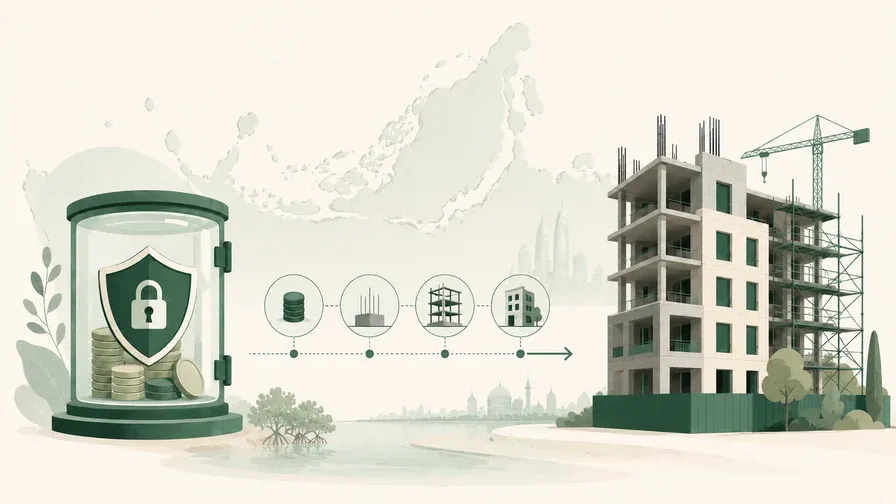
- Your payments sit in a mandatory project escrow account, ring-fenced to the development and released against verified construction progress; pay only into that named account, never a personal or general company account.
- Regulation can verify that a project is registered and authorised; it cannot make the purchase affordable or write your exit terms, so the SPA still carries the risk that matters.
- The two Abu Dhabi figures to plan around are the 2% off-plan registration fee and the UAE Central Bank’s 50% maximum loan-to-value on off-plan finance.
ADREC’s Abu Dhabi role
The Abu Dhabi Real Estate Centre is the emirate’s real estate regulator, responsible for registering developments, licensing the people who sell them, and maintaining the official record a buyer can check a project against. It is the body that gives an off-plan sale its legal footing, and it operates through Abu Dhabi’s own service platforms, DARI and TAMM, where many buyer checks actually happen.
The practical value of knowing this is that it tells you where the source of truth lives. Abu Dhabi runs its own registration path, so the systems a buyer might have read about for Dubai, the DLD, RERA and the Oqood registration process, are not the authority for an Abu Dhabi project. Confusing the two is the most common mistake in cross-emirate buying advice, and it leads people to verify a purchase in the wrong place. When you check an Abu Dhabi project, you are looking for its standing with ADREC, not its presence in a Dubai system.
Regulation gives you a verifiable framework: a registered project, an authorised seller, a documented sale and a recognised payment route. It does not judge whether a deal suits your money or your timeline; that part stays with you. The rest of this guide separates the two, so you know which questions the regulator answers and which you still have to ask yourself.
DARI registration checks
Before you pay a booking amount, the thing you are trying to establish is simple to state and worth being strict about: that the project, the developer and the sale process are legitimate within Abu Dhabi’s system. DARI is the Abu Dhabi real estate services platform where that kind of record-keeping and registration sits, and TAMM is the wider government services platform through which several property services are reached. Treat them as the routes for confirming a project exists on the official record rather than relying on a sales office to tell you so.
A simple habit makes this concrete: if a sales team hands you a payment instruction before you have confirmed the project route through ADREC, DARI or TAMM, treat that as the moment to pause. Confirm that your specific unit, the payment destination and the sale agreement all match the official Abu Dhabi record before any money follows the instruction, because a recognised developer name on its own is not a verified sale.
Abu Dhabi’s off-plan registration also carries a cost the brochure rarely leads with. The off-plan registration fee is 2% of the purchase price, applied through the ADREC DARI platform, and it is set separately from Dubai’s transfer fee, so do not assume the Dubai figure applies. Confirm who is responsible for paying it on your specific purchase, because that can be negotiated, and add it to your budget before you reserve rather than after. Keep the detail of that fee in mind here; the later sections deal with different protections and do not repeat it.
Escrow and payment control
The fear that sits underneath every off-plan purchase is that you pay in stages for years with little control over what happens to the money in between. Abu Dhabi answers this with a mandatory project escrow account. Under the emirate’s Real Estate Sector Regulation Law (Law No. 3 of 2015, as amended by Law No. 2 of 2025), a developer selling off-plan must register the project with ADREC and open a dedicated escrow account, held by an ADREC-accredited account trustee, a bank or financial institution, into which your instalments are paid. The money is ring-fenced to that specific project: it can be spent only on construction and completion costs, not on land or commissions, and is released to the developer against verified construction progress. As a headline safeguard under the amended law, a developer generally cannot draw down escrow funds until at least 20% of construction is verified complete. You can look up a registered project’s escrow account through the official DARI platform.
Strong as that protection is, it is structural, not a guarantee of completion. Escrow controls how and when money is released; it does not promise an on-time handover, and it cannot make a purchase affordable if you cannot meet the construction-stage instalments or the handover payment when they fall due. So treat the payment route as something to confirm in writing: get the project escrow account and the payment schedule named in your documentation, and check that the instructions point to that registered account rather than to a personal or general company account. An instruction to pay anywhere other than the named project escrow account is a reason to stop and verify, not a detail to take on trust.
SPA delay clauses
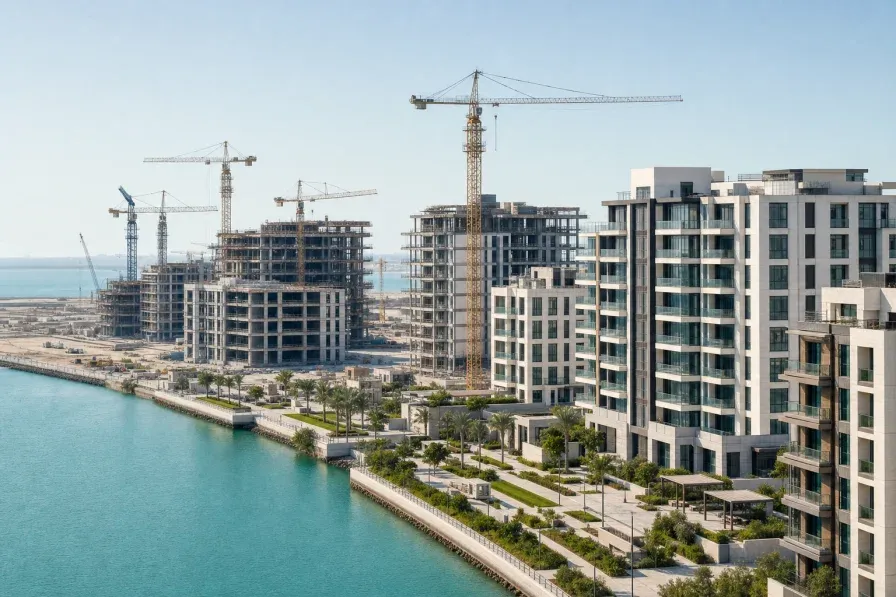
Regulation sets the framework, but the position you can actually enforce usually lives in the sale and purchase agreement. The SPA is the contract between you and the developer covering price, the payment schedule, the handover date, default terms, force majeure and how disputes are handled, and it is where delay is really governed. Off-plan completion dates are targets, and Abu Dhabi handovers can move, so the wording around a slipped date is worth reading before you sign rather than after a delay has already happened.
The clauses to look at are the ones that decide what a delay actually means for you: the stated handover date, any grace period the developer is allowed, the force majeure wording and what it covers, the notice you are entitled to, and the remedy if completion runs materially late. This is a document-checking exercise rather than a place for assumptions, and if the wording is unclear or the sums involved are large, it is reasonable to have the agreement reviewed by a qualified professional before signing. Regulation will not rewrite a clause you agreed to, which is why the SPA, not the marketing, is the part of the purchase that defines your delay position.
Cancellation and default risk
Two situations get blurred together and are worth separating, because they carry different remedies. The first is project-level cancellation or developer non-performance, where a development is wound down or fails to proceed. The second is buyer default, where the buyer misses an instalment or otherwise fails to meet the contract. They are not the same event, and the protections that apply to one do not automatically apply to the other.
For a project-level problem, the questions to put to the developer and to check in the agreement are about the termination triggers, how buyer funds are treated, what is refunded and what may be retained, the notice you would receive and the route for resolving a dispute. Avoid assuming a fixed refund, a set penalty percentage or a guaranteed timeline, because those depend on the project’s official status, how far construction has progressed and the specific provisions of your SPA rather than on a single rule. For buyer default, the consequences are set by the agreement, so read what happens if a payment is missed, including any cure period and what the developer may retain, before you are relying on memory under pressure. The honest framing is that some outcomes are decided by regulation, some by the contract, and some remain uncertain until the facts are known, and knowing which is which before you sign is the protection.
50% off-plan mortgage cap
Buyer protection is not only about whether a purchase is legal; it is also about whether you can complete it. Off-plan finance in the UAE is more constrained than a mortgage on a ready home: under UAE Central Bank Circular 31/2013, the maximum loan-to-value on an off-plan property is 50%, so you need at least half the price covered without the loan, and individual banks may apply stricter terms again. A mortgage on an off-plan unit also typically completes at or close to handover rather than at reservation.
The reason this belongs in a protection guide is that a fully compliant Abu Dhabi purchase can still put you under pressure at the finish line. If the handover payment, the registration fee and the mortgage timing are not planned early, the final instalment can arrive faster than the financing, and the regulatory protections that govern the project do nothing to close that gap. Treat the 50% cap as the affordability anchor, then speak to a bank early so the handover payment and the loan are scheduled to meet.
Before paying a booking fee
Each of the checks below ties back to a protection covered above, turned into something you can do before you commit any money:
What to confirm before you reserve:
- The project and sale appear on the official Abu Dhabi route through ADREC, DARI or TAMM, not a Dubai system.
- The exact legal names of the developer and the project match across the marketing, the record and the agreement.
- How the 2% off-plan registration fee is treated, and who pays it on your purchase.
- Where your payments go, confirmed in writing as the registered project’s account.
- The SPA wording on the handover date, grace period and delay remedy.
- The cancellation and buyer-default terms: triggers, refunds, retained amounts and notice.
- That the purchase works at a 50% mortgage cap, with the handover payment funded.
Run these before the reservation form, not after, because the booking stage is the point at which the registration route, payment destination and contract terms should already be clear.
Read the full Abu Dhabi off-plan buying guide →
Frequently asked questions
Who regulates off-plan property in Abu Dhabi?
The Abu Dhabi Real Estate Centre (ADREC), under the Department of Municipalities and Transport, regulates off-plan property in Abu Dhabi, with buyer checks running through its DARI and TAMM platforms. Dubai’s DLD and RERA do not govern an Abu Dhabi project, so verify through Abu Dhabi’s own channels.
Is DARI registration required for an Abu Dhabi off-plan purchase?
Abu Dhabi off-plan sales are registered through ADREC’s system, and DARI is the platform where that registration and the related records sit. Confirm that your specific project and sale are recorded through the official Abu Dhabi route before paying a booking amount, rather than relying on a sales office to confirm it for you.
How much is the off-plan registration fee in Abu Dhabi?
Abu Dhabi’s off-plan registration fee is 2% of the purchase price, applied through the ADREC DARI platform. It is set separately from Dubai’s transfer fee, so do not carry the Dubai figure across, and confirm who pays it on your purchase before you reserve.
Does Abu Dhabi use Oqood for off-plan property?
No. Oqood is Dubai’s off-plan registration process and does not apply in Abu Dhabi. Abu Dhabi off-plan registration runs through ADREC and the DARI and TAMM platforms, which is why a Dubai process should not be assumed to govern an Abu Dhabi purchase.
What should an Abu Dhabi off-plan SPA say about handover delays?
The sale and purchase agreement should set out the handover date, any grace period allowed to the developer, the force majeure wording, the notice you are entitled to and the remedy if completion runs materially late. These terms vary between developers, so read them before signing and seek qualified legal advice on your specific contract if the wording is unclear.
Can a buyer get a mortgage for Abu Dhabi off-plan property before handover?
Yes, but on stricter terms. Under UAE Central Bank Circular 31/2013 the maximum loan-to-value on off-plan is 50%, and the mortgage usually completes at or near handover rather than at reservation. In practice you fund the booking and construction instalments from cash and arrange financing for the handover payment, so approach a bank early.
What happens if an Abu Dhabi off-plan buyer misses a payment?
Missing an instalment is treated as buyer default, and the consequences are set by the sale and purchase agreement rather than by a single fixed rule. Read what your SPA says about a missed payment, including any cure period and what the developer may retain, before you are in that position, and get qualified advice on your contract if you are unsure.
Data note: This guide is for buyer education and does not replace legal advice on a specific sale and purchase agreement. Regulatory points reference the Abu Dhabi Real Estate Centre (ADREC), the DARI and TAMM platforms and the UAE Central Bank; processes and fees can change, so confirm current requirements with the relevant authority before you commit.
Sources and useful references
- Abu Dhabi Real Estate Centre (ADREC): the Abu Dhabi real estate regulator, for off-plan registration, the project escrow regime and the Real Estate Sector Regulation Law (Law No. 3 of 2015, as amended by Law No. 2 of 2025)
- TAMM: register the sale of an off-plan unit: the official Abu Dhabi off-plan registration service, run with ADREC and the Department of Municipalities and Transport (DMT)
- ADREC DARI: off-plan unit sale registration: the 2% off-plan registration fee
- UAE Central Bank, Circular 31/2013: the 50% maximum loan-to-value rule for off-plan mortgages
- Off-Plan Property in Abu Dhabi: Complete Guide: the wider Abu Dhabi off-plan buying process
The bottom line
ADREC regulation gives an Abu Dhabi off-plan buyer a real framework: a registered project, an authorised sale, a documented payment route and an official record to check, all through Abu Dhabi’s own channels rather than Dubai’s. What it does not do is judge whether the deal fits your budget or write your exit terms, and that is where the sale and purchase agreement and your own checks take over. The safest Abu Dhabi off-plan purchase is the one where every protection question has a documented answer before any money moves: the project verified through ADREC, DARI or TAMM, the payment route named in writing, the SPA’s delay and default terms read closely, and the handover payment funded. Confirm the project route and the contract before you reserve, and browse current Abu Dhabi off-plan projects on Projectory to compare developments before you shortlist.
Also read: Modon and ADIB 75% Off-Plan Financing Explained
Also read: Abu Dhabi vs Dubai for Off-Plan Investment: Costs, Returns and Lifestyle
Also read: Off-Plan Property on Yas Island: What Buyers Need to Know
Also read: Off-Plan Property on Saadiyat Island: Luxury Living in the Capital
About the Projectory Team
Projectory’s editorial content is created and reviewed by its founders, who bring more than 30 years of combined experience brokering, buying, developing and selling property in the UAE.
In this guide series
- Area GuidesOff-Plan Property on Saadiyat Island: Luxury Guide
- Area GuidesOff-Plan Property on Yas Island, Abu Dhabi: What to Know
- Market News & AnalysisModon and ADIB 75% Off-Plan Financing: How It Works
- Developer SpotlightsAldar Properties: Abu Dhabi Off-Plan Projects & Prices
- Investment & ReturnsNawayef East Hills Modon Starting Prices Explained