
Buying Off-Plan Property in Dubai from Abroad: Process, Documents and Costs
Buying Dubai off-plan property from abroad? See the process, documents, power of attorney, Oqood, escrow, DLD fees and non-resident mortgage rules.
What’s in this guide:
- Can you buy Dubai off-plan property while living abroad?
- The remote buying process, step by step
- Documents to prepare before you reserve
- When you need a power of attorney
- How much cash you need
- How to pay safely from overseas
- What to check in the SPA
- Oqood and proof that the sale is registered
- Mortgages for non-resident buyers
- Managing the property through construction and handover
- Frequently asked questions
Buying off-plan property in Dubai from abroad can be completed remotely. You can choose a unit, sign the sale documents, transfer the instalments and receive your registration certificate while living overseas. This guide takes you from the first shortlist to handover.
Quick answer
A non-resident can buy in Dubai’s designated freehold areas using a valid passport. Most developers support remote reservation and signing, then register the sale through Oqood. Budget for the booking amount, purchase instalments, a DLD registration charge that commonly equals 4% of the price, administration and transfer costs, plus any legal or mortgage expenses.
Can you buy Dubai off-plan property while living abroad?
Yes. Dubai Law No. 7 of 2006 allows foreign buyers to own property in areas designated for foreign ownership. The ownership right can be registered in the name of a non-resident who lives outside the UAE.
Popular freehold areas include Business Bay, Dubai Hills Estate, Dubai Creek Harbour and Palm Jumeirah. The exact project and plot must still be open to foreign ownership.
Your nationality and country of residence may affect banking, sanctions screening and the documents requested during compliance checks. They do not create a general requirement to hold a UAE visa before buying.
This guide assumes you are purchasing in your personal name. A company purchase follows a different DLD route, with corporate and beneficial-owner records and, for a foreign company, a potentially eligible Dubai free-zone structure. Take legal and tax advice before reserving in a company name.
The property must sit in a freehold area open to foreign ownership. Confirm the exact plot and registered project with the Dubai Land Department, especially when a marketing campaign uses a broader community name.
The remote buying process, step by step
The practical sequence looks like this:
Choose the shortlist around your reason for buying. A future home needs the right layout, commute and daily amenities. An investment needs a realistic tenant profile and a payment schedule you can fund comfortably. The complete guide to buying off-plan property in Dubai covers that wider project decision.
Before reserving, ask for the exact unit, floor, view, area, price and payment plan. Search the project through the DLD Project Status service or Dubai REST, and check the agent’s RERA broker card. The reservation form should show the unit, amount paid, refund terms and both buyers’ ownership shares where relevant.
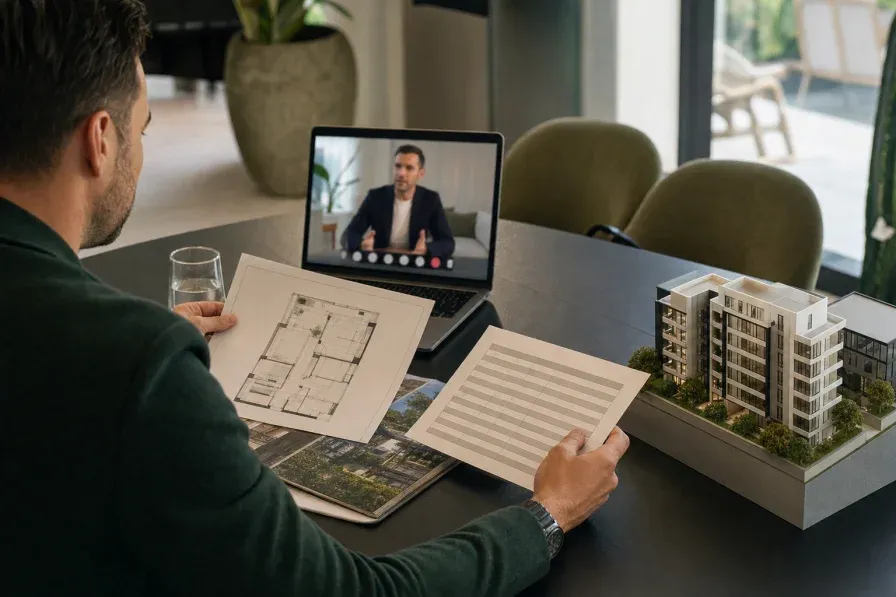
Documents to prepare before you reserve
A passport is the core DLD identity document for a non-resident individual. The developer, broker, escrow bank and any mortgage lender will also complete customer checks, so prepare a wider file.
Use the same spelling, order and passport number across every form. Tell the developer promptly if the passport changes after signing.
Source-of-funds checks are a normal part of a UAE property purchase. A property sale statement, investment redemption record, salary history, company dividend paperwork or inheritance document may be relevant. If another person will contribute, explain the arrangement before sending the funds.
Documents issued outside the UAE may need attestation or certified Arabic translation when they are used for a formal DLD action. Confirm the exact requirement before arranging either service.
When you need a power of attorney
You may be able to reserve, sign and complete Oqood registration without appointing anyone, particularly when the developer supports electronic signing and manages the registration through its Oqood account.
A power of attorney becomes useful when someone in Dubai needs to sign, submit, collect, inspect or complete a transaction for you.
DLD says a power of attorney issued abroad must be ratified through:
- a notary public and the foreign-affairs authority in the country of issue;
- the UAE embassy or consulate in that country;
- the UAE Ministry of Foreign Affairs after it reaches the UAE.
Arabic translation may be required. DLD’s FAQ gives a five-year validity period for a purchase power of attorney from the date of notarisation.
Keep the authority specific and identify each power being granted. Ask the developer, trustee or UAE lawyer to approve the wording before notarisation.
How much cash you need
Your cash requirement consists of the purchase instalments and transaction costs. A developer’s instalment schedule may spread the price across several years, while the reservation amount and DLD charge can fall due near the beginning.
For an AED 2 million unit, a 4% DLD registration charge equals AED 80,000. A 10% booking amount would be AED 200,000. Check whether that amount forms part of the first purchase instalment and when the DLD charge is collected.
Ask for a cost sheet showing the price, every instalment, the DLD amount, administration charges and any other amount due before handover.
Most primary off-plan launches do not add a separate buyer-side brokerage commission. Confirm that point on the reservation form, especially if you are buying an assignment or resale of an existing off-plan contract.
Your country of residence may tax foreign rental income, gains, wealth or inheritance. Obtain country-specific advice before deciding whose name will appear on the SPA.
How to pay safely from overseas
International payments deserve a repeatable routine. Use it for the booking amount and every later instalment:
- Match the project and developer against the DLD record.
- Obtain the payment notice and bank details from an authorised developer contact.
- Check the project escrow information through DLD or Dubai REST.
- Confirm the beneficiary and account by calling a published developer number.
- Add the unit number and buyer name to the bank reference.
- Save the transfer confirmation and send it to the developer.
- Obtain an official receipt and updated statement of account.
Dubai’s escrow law requires off-plan buyer payments to be deposited into the dedicated account for that project. The account is opened in the project’s name and its funds are used for the project. Our guide to RERA and escrow protection for Dubai off-plan buyers explains the protection and the construction-linked release of funds.
Pause if the beneficiary is an individual, an unrelated company or a different project. Ask for a formal explanation before sending anything.
Transfer a few business days before the due date. A payment can arrive short when banks deduct fees, so ask whether the developer must receive the exact AED amount.
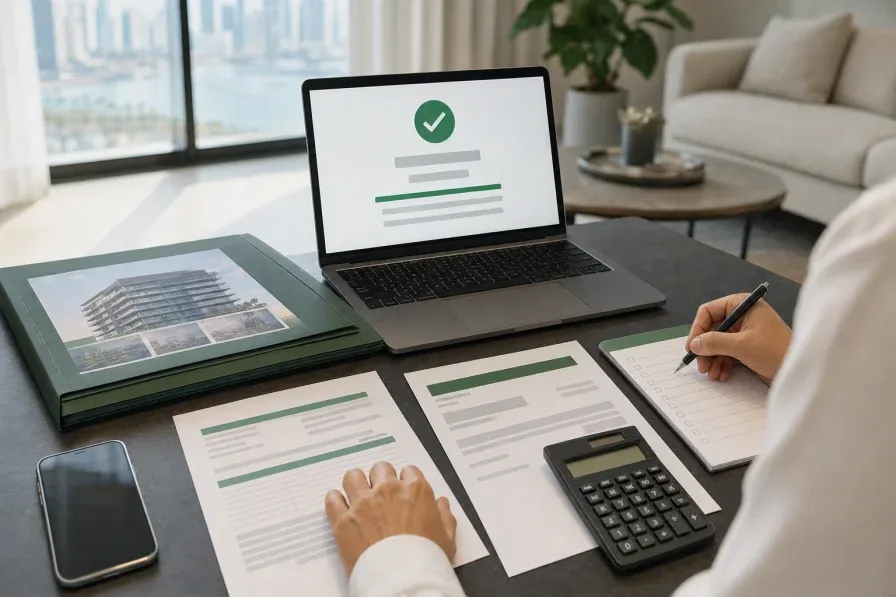
What to check in the SPA
Treat the SPA as the contract that controls the purchase. Marketing material helps you understand the project, while the signed schedules fix the legal and financial detail.
Check these points:
- Buyer: exact passport name, nationality, address and contact details.
- Property: project, building, unit number, floor, type, area, parking and any storage.
- Price: full purchase price, taxes and fees, payment destination and payment dates.
- Plan: which instalments fall on calendar dates and which depend on construction milestones.
- Completion: expected completion wording, any extension period, handover notice and final-payment timing.
- Specification: plans, finishes, permitted changes and the treatment of an area difference.
- Default: late-payment consequences, notice periods, termination and refund provisions.
- Resale: the point at which an assignment may be allowed, the developer’s NOC conditions and fees.
- Handover: inspection access, snagging, account clearance and documents to be issued.
- Disputes: governing law, notices and the agreed dispute route.
Ask questions in writing and keep the answers. Put any commercial promise that affects your decision into the signed contract or an agreed addendum.
UAE legal advice is sensible for a company purchase, an unusual ownership structure or SPA wording you cannot assess confidently. Arrange the review before the signing deadline.
The common off-plan mistakes guide covers the wider checks. If you may sell before completion, read the Dubai assignment-sales guide before agreeing to a payment plan that could limit your resale window.
Oqood and proof that the sale is registered
Oqood is the provisional register used for off-plan transactions in Dubai. Once the signed sale is registered, the provisional certificate links you to the property while it remains under construction. The final title-deed process follows completion and handover.
Calendar the SPA deadline, any registration payment and the date the developer says Oqood evidence will be issued. Follow up if it does not arrive and ask for the application or registration reference.
Keep the reservation form, signed SPA, Oqood certificate, receipts, bank transfer confirmations and statements together. That file becomes especially valuable if staff change, a payment is queried or you later sell the contract.
Mortgages for non-resident buyers
UAE lenders can finance eligible non-residents, although approval depends on the buyer, property, developer, construction stage and bank policy.
Central Bank regulations cap off-plan mortgage lending at 50% of the property’s value. A bank may offer less or decline a project. The rules also set a maximum debt burden of 50% of gross monthly income and limit expat borrowing to seven years of annual income.
Many overseas buyers fund the construction instalments and arrange finance closer to completion. If a large amount falls due at handover, speak to lenders early.
Do not reserve a unit on the assumption that a future mortgage will cover the final balance. Obtain a realistic affordability view and keep an alternative funding route. Our Dubai off-plan mortgage guide covers banks, costs and product timing, while the final 12-month handover mortgage checklist shows when to start each step.
Managing the property through construction and handover
Save each DLD progress check, developer update, instalment notice, receipt and account statement. Review the file monthly and keep your contact and passport details current.
Use the Dubai off-plan construction-progress guide for the official DLD workflow and a simple monthly record.
Six to twelve months before expected handover, ask about inspection, final payment, mortgage, snagging and key collection. Decide whether you will attend or appoint someone locally.
Property ownership may also support a UAE Golden Residency application when the relevant real-estate investment reaches AED 2 million and the current eligibility conditions are met. Residency is a separate application. Read the Dubai property Golden Visa guide and confirm the current official requirements when you are ready to apply.
Your final overseas-buyer checklist
Before the booking payment leaves your account, make sure you can answer yes to these points:
- The project is registered and the details match the unit I am buying.
- The developer, broker and payment instructions have been checked.
- I understand the reservation refund and cancellation terms.
- I can fund the complete payment plan, DLD charge and other costs.
- I have evidence showing where the purchase funds came from.
- I have read the SPA, schedules and handover wording.
- I know when and how the Oqood certificate will be issued.
- I know who will act locally if any step requires my presence.
Frequently asked questions
Can I complete the whole purchase without visiting Dubai?
Often, yes. Many developers support remote reservation, electronic SPA signing and Oqood registration. A properly attested power of attorney can cover any step that requires a representative in Dubai.
Can I buy off-plan property in Dubai without a UAE visa?
Yes. UAE residency is not a condition of buying in a designated freehold area.
Do I need a UAE bank account?
Many overseas buyers pay from a foreign account. Ask the developer which currency it accepts and how bank charges must be handled.
Can I sign the SPA electronically?
Many developers support electronic signing. Ask whether any document still requires an original signature or local representative.
What documents does a non-resident need?
Start with a valid passport, proof of address and evidence showing the source of your funds. The document checklist covers the full file.
Does an overseas power of attorney need UAE attestation?
Yes, when it will be used for a DLD transaction. It must complete the attestation route described in the power-of-attorney section.
Where should I send off-plan payments?
Use the developer’s approved route, check the project escrow details and keep the transfer proof, receipt and updated statement.
What is Oqood?
Oqood is Dubai’s provisional register for off-plan property. The developer uses it to register the signed sale while the unit is under construction.
Can a non-resident get an off-plan mortgage?
Potentially. Central Bank rules cap off-plan lending at 50% loan-to-value, and banks apply their own borrower and project criteria.
Does buying property automatically give me residency?
No. A qualifying investment may support a separate application under the current property-residency routes.
A clean remote purchase
Keep the registered project, selected unit, escrow account, signed SPA, Oqood certificate and payment receipts in one clear record. Give international transfers enough time and keep the handover balance in view from day one.
Dubai Property for Indian Buyers: LRS, TCS & Repatriation
Read our detailed analysis: Dubai Property for Indian Buyers: LRS, TCS & Repatriation
Official sources
- Dubai Law No. 7 of 2006 concerning real-property registration
- Dubai Law No. 8 of 2007 concerning real-estate development escrow accounts
- Dubai Land Department: Frequently Asked Questions
- Dubai Land Department: Project Status
- Central Bank of the UAE: Regulations regarding mortgage loans
- UAE Government: Golden Residency
About the Projectory Team
Projectory’s editorial content is created and reviewed by its founders, who bring more than 30 years of combined experience brokering, buying, developing and selling property in the UAE.