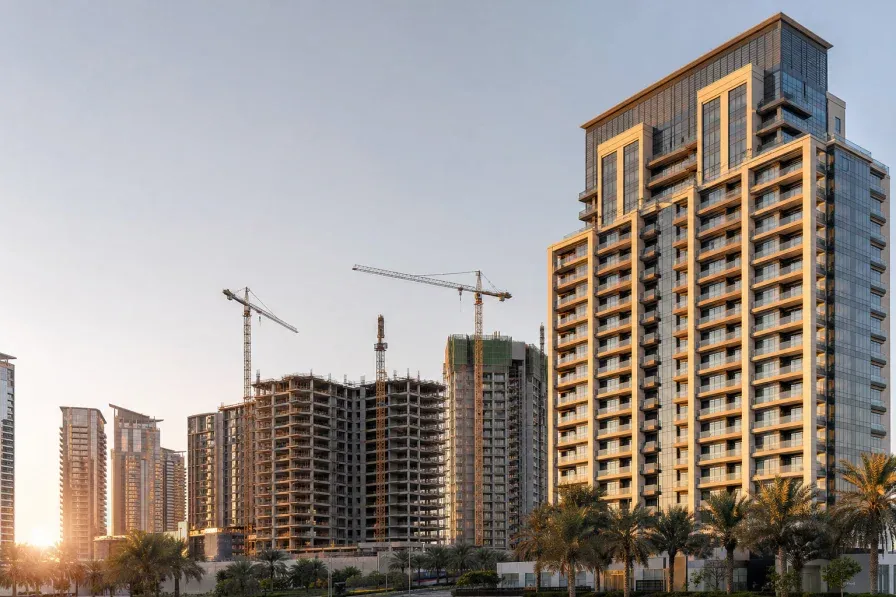
Best Off-Plan Developers in the UAE: A 2026 Buyer's Guide
Shortlist the best off-plan developers UAE buyers should research, with Dubai-led evidence on delivery, pricing bands, payment plans and buyer fit.
The strongest off-plan developer for one buyer can be the wrong starting point for another. A buyer with a budget of AED 750,000 looking at Jumeirah Village Circle apartments, a family weighing a master-planned villa community, and an investor planning a resale before handover are making three different decisions.
This guide treats the search for the best off-plan developers in the UAE as a practical research process: which developers deserve your time once you know your budget, payment-plan comfort, preferred community and the checks you are willing to complete before paying a booking amount.
The evidence is strongest for Dubai, where off-plan represented roughly seven in ten sales by volume over the year to early April 2026, based on DXB Interact transaction data. This guide is therefore structured by emirate and weighted by evidence: Dubai leads because the data is clearest there, while Abu Dhabi and the northern emirates are covered separately rather than treated as an aside. It uses company disclosures, public market context and Projectory project facts as inputs, then keeps the focus on buyer fit rather than blanket developer verdicts.
What’s in this guide:
- How to score an off-plan developer
- What the sources can and cannot prove
- Dubai developers (where the evidence is strongest)
- Abu Dhabi developers
- Sharjah, RAK and the northern emirates
- How payment plans change developer fit
- Buyer-fit scenarios by budget and product type
- Registration, escrow and authority checks
- What to compare after choosing a developer shortlist
Key takeaways:
- There is no single best developer in the UAE. The right choice depends on budget, location, payment-plan structure, handover timing and the checks you complete before reserving.
- Dubai has the clearest data trail, so it leads this guide, with Abu Dhabi and the other emirates covered more qualitatively where the public data is thinner.
- The named Dubai developers (EMAAR, Binghatti, Sobha Realty, DAMAC, NSHAMA, Ellington) carry the clearest sourced records. Abu Dhabi is covered separately through Aldar, Modon and Reportage, with more reliance on company disclosures and emirate-specific checks, while the northern emirates need their own local authority review.
- A lower booking payment is not automatically better. It may simply move more of the price to handover, where you need savings, mortgage capacity or a clear resale plan.
- Before trusting any shortlist, confirm project registration, escrow details, developer registration and SPA/Oqood documentation through the relevant emirate authority.
At a glance: the developers covered in this guide, grouped by emirate.
Data note: This guide is for buyer education and does not replace legal, tax or investment advice on a specific purchase. Dubai market references use public transaction and research sources available at the time of writing, including DLD/DXB Interact, ValuStrat, Cavendish Maxwell and developer disclosures. Company delivery, backlog and pipeline figures are treated as company-stated figures, not independent quality scores. For non-Dubai projects, verify the relevant authority process in that emirate rather than assuming Dubai’s DLD/RERA route applies.
How to score an off-plan developer in 2026
A developer earns a shortlist place on evidence you can check, not on how often you have seen the name on a billboard. Brand recognition reflects operating history and marketing reach; it is not the same as a guarantee that a specific project suits your budget, timeline or funding plan.
Use the same lens for every developer:
- Operating history and handovers: how long the company has been active, and what it says it has completed.
- Authority and escrow visibility: whether the specific project is registered and has the required escrow arrangements in its emirate.
- Current launch pattern: which communities the developer is building in now, and at what price level.
- Payment-plan structure: how much you pay during construction and how much remains at handover.
- Handover timing: whether your funding plan still works if delivery takes longer than expected.
- Community footprint: whether the developer focuses on one master community or spreads across several areas.
- Buyer fit: whether the product suits an entry-level apartment buyer, a family, a branded-residence buyer or a villa buyer.
The useful discipline is to separate evidence from conclusions. A developer’s own disclosure can show what the company says it has delivered or has under development; it cannot, on its own, tell you whether a specific launch is the right fit. Market data can show demand, prices and transaction activity, but the buyer decision still comes down to the project, payment schedule, handover timing and your ability to verify the details.
What the sources can and cannot prove
The evidence base is strongest for Dubai because the clearest public data is Dubai-focused. DLD and DXB Interact transaction data covers Dubai, ValuStrat’s public residential index is Dubai-focused, and several detailed developer disclosures relate to companies with large Dubai pipelines.
Use the guide as a practical starting point for UAE research, then apply the correct authority checks in the emirate where the project sits. Aldar, for example, belongs in an Abu Dhabi conversation, but Abu Dhabi uses ADREC rather than Dubai’s DLD/RERA process. Sharjah, Ras Al Khaimah and the northern emirates have their own authority checks and ownership rules.
For Abu Dhabi and other emirates, the buyer task is to confirm the project’s registration, escrow mechanism, payment schedule and sales documentation through the correct authority before relying on the developer’s brand name.
Dubai developers
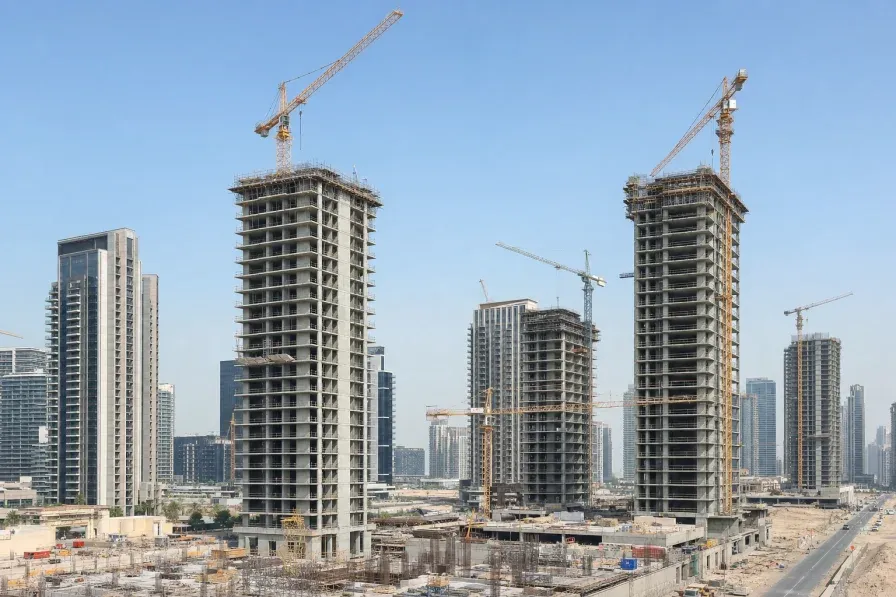
Dubai carries the bulk of this guide because it carries the bulk of the evidence: the most detailed public transaction data, the clearest price indices and the most complete company disclosures all centre here. These six developers cover the main Dubai price bands and community styles, and each entry pairs what the company says it has built with the source and date behind it.
EMAAR
EMAAR is the longest-operating Dubai name in this shortlist. Emaar Properties PJSC was incorporated in 1997, and Emaar Development reports more than 82,700 residential units delivered since 2002, with about 53,000 residential units under development as of 31 March 2026. Its Q1 2026 disclosure also refers to a revenue backlog of AED 134.6 billion, which is a corporate backlog figure, not a property price.
Community pattern: Emaar is associated with major Dubai communities including Downtown Dubai, Dubai Marina, Dubai Hills Estate, Emaar Beachfront and Dubai Creek Harbour. Several of these communities continue to deliver in phases.
Buyer fit: buyers who want established community names, resale familiarity and a long company operating history, and who are comfortable comparing projects at higher price points.
Verification point: read Emaar’s record at the project and phase level. A master community may deliver over many years, so the handover status of your specific building or phase matters more than the group headline. Its Dh200 billion masterplan announcement is a useful example of why buyers should wait for a named location, first release and price band before treating a corporate announcement as a purchase opportunity.
Binghatti
Binghatti is a higher-volume Dubai developer with a footprint concentrated in dense apartment-led locations. Founded in 2008, the company reports more than 12,000 residential units delivered since inception. Its Q1 2026 results also refer to a development backlog of about AED 52 billion, which is a corporate development pipeline figure, not a unit price.
Community pattern: Binghatti has clustered projects in areas such as Jumeirah Village Circle, Business Bay and Al Merkadh. Binghatti Azure by Binghatti Developers is a useful example of its lower-entry apartment positioning: Projectory lists it from AED 737,000 to AED 1,500,000 across studios to two-bedroom units, with a 20/50/30 payment plan and a 1 October 2024 handover date. Because that handover date is now historical, use it as a price-band and product-style reference, not as a current off-plan opportunity.
Buyer fit: buyers looking for lower-entry apartments in central or high-density communities, especially studio and one-bedroom investors comparing rental-demand locations.
Verification point: visit a completed Binghatti building if possible, and compare the exact building, layout, service-charge expectation and handover status before reserving. The full Binghatti developer profile reviews its current portfolio, price positioning and payment plans in more detail.
Sobha Realty
Sobha Realty markets itself around specification-led communities and controlled master-planning. Sobha Realty reports establishing its Dubai presence in 2003. Company statements reported in 2026 refer to approximately 3,000 units completed in 2025 and more than 30,000 units under construction at end-2025.
Community pattern: Sobha Realty is closely associated with Sobha Hartland and phased projects such as Sobha Creek Vistas, Waves and related Hartland residences.
Buyer fit: buyers who prioritise a single master-community setting and advertised specification, generally at a higher price point than the lowest-entry Dubai apartment stock.
Verification point: use Sobha Realty’s company delivery figures as background, then test the specific launch on handover date, price, floor plan, service-charge expectations and registration status. The project details matter more than assuming the same outcome across every building.
DAMAC Properties
DAMAC Properties is a high-volume Dubai developer known for branded residences and master-community launches. The property development arm was established in 2002, and company statements have referred to roughly 50,000 residential units delivered and more than 54,000 units under construction across multiple markets.
Community pattern: DAMAC projects span Dubai Marina, Business Bay, Jumeirah Village Circle and master communities such as DAMAC Hills and Damac Lagoons.
Buyer fit: buyers comparing themed communities, branded residences and larger master-plan environments across a wide price range.
Verification point: DAMAC is privately held, so focus on the specific project stage, authority registration, escrow details and payment plan rather than relying only on the portfolio headline.
NSHAMA
NSHAMA is the most focused developer in this group, built around Town Square Dubai. Founded in 2014, it has handed over phases of Town Square since 2017.
Community pattern: NSHAMA’s product is concentrated in Town Square Dubai, an affordable-to-mid master community with apartments and townhouses.
Buyer fit: family-focused and value-conscious buyers who want a planned community setting, parks and day-to-day amenities at a more accessible price than many central districts.
Verification point: where a current cumulative delivery total is not clearly established, judge NSHAMA project by project. Visit a completed phase and check the registration status of the specific launch you are considering. Projectory’s NSHAMA developer guide covers Town Square projects, pricing and payment-plan patterns.
Ellington Properties
Ellington Properties is a design-led Dubai developer founded in 2014. Its completed and handed-over projects include the Belgravia series, Eaton Place, DT1, Wilton Terraces I & II and Berkeley Place, based on developer announcements and press reporting.
Buyer fit: apartment buyers who care about architecture, finish, building scale and a more design-led product rather than the largest possible pipeline.
Verification point: because a current aggregate delivery total is not clearly published, use completed buildings as your evidence base. Visit a handed-over Ellington project before relying on the brand for an off-plan decision.
Buyers comparing newer design-led brands should also examine Beyond Developments, OMNIYAT Group’s younger premium brand focused heavily on Dubai Maritime City. Its first handovers are still ahead, so the relevant checks are group backing, project registration, construction progress and whether the emerging waterfront district fits the buyer’s timeline.
Aqua Developments has completed apartment and hospitality projects across Dubai and currently focuses on Arjan, Dubai Sports City and Motor City. Our Aqua Developments projects and track record guide compares its completed work, current prices, payment plans and buyer fit.
Ellington Properties has built a recognisable design-led portfolio across Dubai and Ras Al Khaimah. Our Ellington Properties projects and track record guide compares completed developments, current launches, prices, payment plans and buyer fit.
Abu Dhabi developers
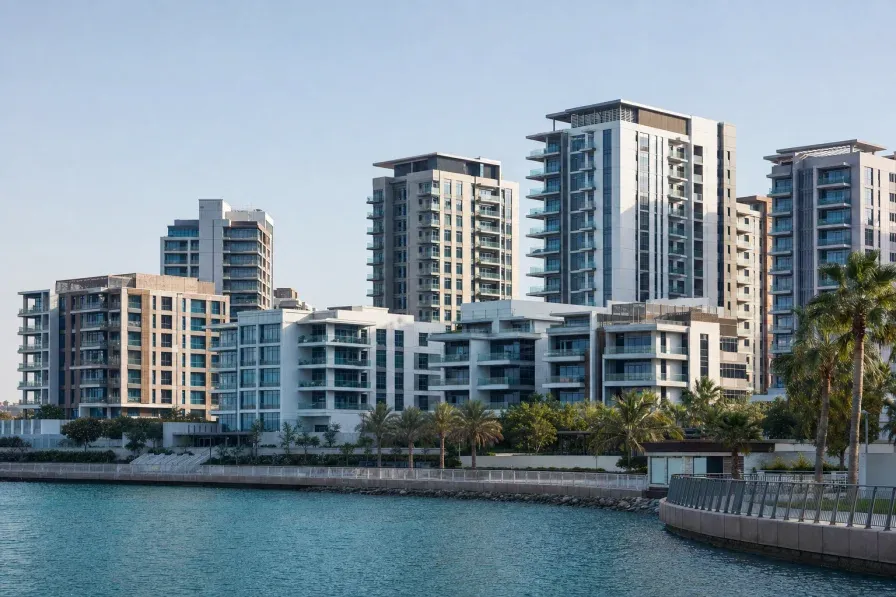
Abu Dhabi gets its own section rather than a footnote. The public evidence base is thinner than Dubai’s, so these entries lean more on company disclosures, named communities and ADREC-specific checks than on market-wide transaction figures. That is a data limitation, not a judgement on the developers.
Aldar Properties
Aldar Properties is Abu Dhabi’s largest listed developer and the anchor of the emirate’s off-plan market. Established in 2004, Aldar reports a development revenue backlog of AED 72.1 billion at end-Q1 2026 and active construction across Abu Dhabi, Dubai and Ras Al Khaimah. This is a corporate backlog figure, not a property price.
Community pattern: Aldar is associated with Abu Dhabi locations including Yas Island, the Al Raha area and Al Reem Island.
Buyer fit: buyers focused on Abu Dhabi lifestyle locations, particularly Yas Island, Saadiyat-area and waterfront communities.
Verification point: Abu Dhabi uses ADREC, not RERA. Do not apply Dubai registration and escrow steps automatically to an Abu Dhabi purchase.
Modon
Modon is an Abu Dhabi developer founded in 2018, associated with large master-planned island and waterfront communities in the emirate, with current off-plan activity on Hudayriyat Island and Al Reem Island. Its focus sits in Abu Dhabi rather than Dubai.
Buyer fit: buyers focused on Abu Dhabi island and master-community living, particularly newer Hudayriyat Island and Al Reem Island addresses.
Verification point: this guide does not carry a sourced delivery or pipeline figure for Modon, so read its record project by project. Confirm the specific project’s registration, escrow and handover status through ADREC (Abu Dhabi’s authority, not Dubai’s RERA) before relying on the brand.
Reportage Properties
Reportage is an Abu Dhabi-headquartered, value-led developer founded in 2014, active across both Abu Dhabi and Dubai. Public reporting has referenced completed projects including Leonardo Residences, Rukan Lofts Phase 1 and Rukan Tower.
Buyer fit: entry-level buyers and investors comparing accessible-price projects, often outside the highest-priced central districts.
Verification point: where a verified cumulative delivery total is not clearly established, rely on named completed projects, construction progress and authority records for the specific launch.
Sharjah, Ras Al Khaimah and the northern emirates
The northern emirates run on their own authorities and ownership rules, so a Dubai or Abu Dhabi shortlist does not carry over cleanly. Sharjah, Ras Al Khaimah, Ajman, Umm Al Quwain and Fujairah each set their own off-plan registration, escrow and foreign-ownership terms, and freehold eligibility varies by zone and project. For these markets, the safest starting point is the specific emirate’s authority process, the ownership rules and the freehold status of the exact project before any brand comparison. If you are weighing a project in one of these markets, confirm the local registration and ownership rules first.
BNW Developments is one of the most active names on Al Marjan Island, with waterfront apartments, branded residences and a smaller Dubai portfolio. Our BNW Developments projects and track record guide compares its prices, payment plans, handovers and buyer fit.
How payment plans change which developer suits you
The right developer for your cash flow depends less on the logo and more on when the money is due. Off-plan payment plans are interest-free instalment structures, but they can place very different pressure on your savings, income or mortgage plan.
These Projectory examples show the range in practice. Use them as payment-plan illustrations:
A 20/20/60 plan keeps construction-period payments lighter, but it leaves 60% of the price for handover. If you cannot fund that from savings, you need a mortgage route or a resale plan before completion. A 20/50/30 plan collects more during construction and leaves a smaller balance at the end. Neither structure is automatically better. The better fit is the one you can fund without relying on an optimistic exit.
A practical test: if funding that final handover payment would force a rushed resale or an over-stretched mortgage, the plan is too aggressive for your situation. Favour a smaller handover balance, even if the entry price is a little higher.
For the wider mechanics of fees, Oqood, mortgage timing and resale planning, read the UAE off-plan investment guide.
Which developer profile fits your buyer scenario
Use your own purchase type to narrow the field before comparing individual projects.
In practice, the developer name gets a project onto the shortlist; the payment plan, handover date, building quality and authority checks decide whether it deserves to stay there.
Entry-level apartment buyers usually want the lowest credible entry price in an area with rental demand. Binghatti Azure, from AED 737,000 in Jumeirah Village Circle, is a historical price-band example for this type of search. Blossom 40, from AED 1,165,000 in Dubailand, shows a different entry-level route for buyers considering apartments further from the centre.
Family-focused master-community buyers usually prioritise parks, everyday amenities and a planned environment. NSHAMA’s Town Square stock and DAMAC’s master communities are natural places to compare, but the specific cluster, school access, road access and handover timing still decide the fit.
Branded-residence buyers want a branded product and are comfortable at higher price points. Tonino Lamborghini Residences in Meydan starts from AED 2,500,000 on Projectory and is a useful example of this buyer lane.
Villa buyers with larger handover obligations need to plan the final payment years ahead. D Villas by Dar Global in Jumeirah Golf Estates starts from AED 6,600,000 on Projectory, has a 2029 handover and uses a 20/40/40 plan. The headline price matters, but the 40% handover payment is the planning point.
Across all four buyer types, the discipline is the same: choose the developer and project whose payment timing fits money you can actually prove you will have, not the most recognisable logo or the lowest booking amount.
Named projects should be used as examples of price band, location and payment-plan style. They do not prove portfolio-wide consistency, and availability can change quickly.
Checks to run before paying a booking amount
Before paying a booking amount on any Dubai off-plan project, verify three things: project registration, escrow and official sales documentation. These checks matter more than marketing claims because escrow controls help govern how buyer funds are held and released, but they do not guarantee instant refunds or on-time completion.
A clean brand name is not a substitute for a clean payment route. If the project, escrow account or payment instructions cannot be verified through official channels, pause before transferring funds.
For Dubai projects, work through this sequence:
- Confirm project registration and status through the DLD Project Status Enquiry tool.
- Confirm the escrow account. Off-plan buyer payments should go into the project-specific RERA-regulated escrow account at a licensed UAE bank, with releases linked to verified construction milestones.
- Check the developer’s registration through the relevant Dubai/RERA records.
- Review the SPA and Oqood. Your SPA should state price, payment schedule, completion date, handover provisions and penalty clauses. Your purchase should be registered through the proper off-plan registration route.
- Keep payment instructions official. Do not transfer funds to an account that does not match the official project payment route.
These Dubai processes do not automatically apply outside Dubai. Abu Dhabi uses ADREC; other emirates have their own authorities and foreign-ownership rules. For any non-Dubai project, verify through the relevant emirate authority before relying on a brand shortlist.
After choosing developers, compare areas and projects
Once you have a developer shortlist, the next decision is the area and the specific project. A recognised developer can reduce uncertainty, but it cannot remove area, supply, layout, service-charge or resale risk. Those are project-level checks, not brand-level checks.
It helps to work in a clear order: narrow your developers, then narrow communities, then compare individual projects on handover date, payment-plan exposure, service-charge expectations and floor plan. If you need to shortlist communities, the best areas to buy off-plan in the UAE guide explains what each location offers. If you need a project-by-project method, the compare off-plan projects guide sets out the checks.
Dubai’s 2026 demand signals should also be read by area, product type, payment plan and handover year rather than as one citywide verdict. For that wider view, see Dubai off-plan market demand in 2026.
Frequently asked questions
Can a Dubai-led developer shortlist answer a UAE-wide developer search?
Partly. The detailed evidence is strongest for Dubai developers and Dubai market conditions, so this is a practical starting point for many UAE off-plan searches. It is not a definitive ranking of every developer across Abu Dhabi, Sharjah, Ras Al Khaimah and the northern emirates, which is why Abu Dhabi and the northern emirates have their own sections here.
Which developer checks matter most before paying a booking amount in Dubai?
Confirm project registration, escrow and official documentation. Check the project through the DLD Project Status Enquiry tool, verify that payments go into the project-specific escrow account, and review the SPA and Oqood route before money moves.
Should I choose a developer first or choose the community first?
Use the developer shortlist to narrow the field, then let the community and project decide the outcome. The area drives tenant demand, end-user lifestyle, supply competition and resale liquidity.
How should I compare EMAAR, Binghatti, Sobha Realty and DAMAC if their projects sit in different price bands?
Compare them against your budget and buyer profile, not head to head. EMAAR is linked to established master communities, Binghatti often gives lower-entry apartment options, Sobha Realty focuses on specification-led communities, and DAMAC spans branded and master-community stock.
Does a lower booking payment make an off-plan purchase safer?
Not automatically. A lower booking payment may leave a larger amount due at handover. A 20/20/60 plan can feel easier during construction but still requires a clear plan for the final 60%.
Can Aldar or Modon be ranked against Dubai developers without Abu Dhabi-specific market data?
Not fairly. The strength of an Abu Dhabi developer such as Aldar or Modon sits in Abu Dhabi, which uses ADREC rather than RERA and has less citable public transaction data. This guide treats them as Abu Dhabi developers in their own right, not as Dubai-ranked comparisons.
How should I use named projects such as Binghatti Azure, Blossom 40 or D Villas?
Use them as examples of price band, location and payment-plan style. They do not prove that every project by the same developer will offer the same value, delivery timing or buyer fit. Always confirm the live project status and availability before relying on a specific example.
DAMAC Properties: Dubai Off-Plan Projects and Payment Plans
Read our detailed analysis: DAMAC Properties: Dubai Off-Plan Projects and Payment Plans
Modon Holding: Abu Dhabi Off-Plan Projects, Prices & Plans
Read our detailed analysis: Modon Holding: Abu Dhabi Off-Plan Projects, Prices & Plans
Sources and useful references
- DLD Project Status Enquiry, for the Dubai project-status verification route.
- DXB Interact transaction data, for Dubai transaction and off-plan market context.
- ValuStrat Dubai Residential Price Index, for Dubai residential price context.
- Cavendish Maxwell Dubai Residential Market Performance, for wider Dubai residential market context.
- Company disclosures and statements referenced in the body: Emaar Development Q1 2026 investor release, Binghatti H1 2025 and Q1 2026 results, Aldar Q1 2026 results, DAMAC company statements, and Sobha Realty company statements reported in 2026.
The best off-plan developer is the one whose price band, payment structure, community footprint and verifiable record match your actual decision. Review the project-comparison guide on Projectory to move from developer shortlist to handover, payment-plan and location checks →
About the Projectory Team
Projectory’s editorial content is created and reviewed by its founders, who bring more than 30 years of combined experience brokering, buying, developing and selling property in the UAE.
In this guide series
- Developer SpotlightsEllington Properties Dubai: Off-Plan Projects & Track Record
- Developer SpotlightsAqua Developments Dubai: Off-Plan Projects and Track Record
- Developer SpotlightsBNW Developments UAE: Off-Plan Projects and Track Record
- Developer SpotlightsBeyond Developments Dubai: Projects, Track Record and What to Check
- Developer SpotlightsModon Holding: Abu Dhabi Off-Plan Projects, Prices & Plans
- Developer SpotlightsDAMAC Properties: Dubai Off-Plan Projects and Payment Plans
- Developer SpotlightsNSHAMA: Dubai Off-Plan Projects, Prices & Payment Plans
- Developer SpotlightsBinghatti: Dubai Off-Plan Projects, Prices & Payment Plans